


So, you’re bitten by the camping bug? Awesome! Getting out into nature is one of the most rewarding experiences you can have. But, let’s be real – wandering aimlessly in the woods isn’t exactly the scenic adventure you’re dreaming of. That’s where navigation comes in. Don’t worry; you don’t need to be Bear Grylls right away. With the right tools and a bit of know-how, you can confidently explore the great outdoors. This guide breaks down the top 5 navigation tools every beginner camper needs to stay safe and on track. Ready to become a wilderness wanderer? Let’s get started!
1. The Indispensable Map: Your Paper Lifeline
Forget fancy gadgets for a second. The humble map is your first and arguably most crucial navigation tool. Why? Because batteries don’t die on maps. Maps don’t lose signal. A good, old-fashioned paper map is reliable when all else fails. Think of it as your trusty sidekick – always there, rain or shine. It’s essential to pick a topographic map (topo map) which shows elevation changes. These are critical for understand the terrain around you.
Why a Paper Map Still Matters
You might be thinking, “But I have GPS on my phone!” and that’s a fair point. Phones are great, until they’re not. Dead batteries, signal loss, cracked screens… These are all too common in the wilderness. A paper map? It just sits there, patiently waiting to be consulted. Maps also encourage you to understand the bigger picture, forcing you to visualize the landscape in a way a small screen never could.
Choosing the Right Map
- Topographic Maps: These show elevation changes using contour lines, which are crucial for understanding the terrain.
- Waterproof/Water-Resistant: A must! A soggy map is a useless map.
- Scale: Pay attention to the scale (e.g., 1:24,000). This indicates the ratio between distances on the map and real-world distances. Smaller scales cover larger areas with less detail, while larger scales offer more detail but cover smaller areas.
- Currency: Make sure the map is up-to-date! Trails change, roads get rerouted, and sometimes, even the landscape shifts (slowly, of course).
Map Reading Basics
Okay, so you have a map. Now what? Here are a few key things to understand:
- Legend: This explains the symbols used on the map (e.g., trails, campsites, water sources).
- Contour Lines: These lines connect points of equal elevation. Closely spaced lines indicate steep slopes, while widely spaced lines indicate gentle slopes. The closer the contour lines, the steeper the slope, think heart-pumping climb.
- Orienting the Map: This means aligning the map with the terrain around you. You’ll need a compass for this, which brings us to our next tool…
Seriously, take the time to learn basic map reading. It’s a skill that can save your bacon (and make your hikes a lot more enjoyable).
2. The Trusty Compass: Your Directional Guide
If a map is your landscape overview, then a compass is your personal guide. It’s all about direction. This tool isn’t just a cool-looking accessory; it’s your compass, quite literally, to avoid getting turned around. Whether you’re navigating through dense forests or across open fields, a compass will keep you pointed in the right direction.
Why a Compass is Essential
Unlike your phone, a compass doesn’t rely on batteries or cell signals. It’s a simple, reliable tool based on the Earth’s magnetic field. It always points north (well, magnetic north, but we’ll get to that). Combine it with a map, and you have a powerful navigation system that works anywhere, anytime.
Choosing the Right Compass
For beginners, a baseplate compass is the way to go. These are easy to use and relatively inexpensive. Here’s what to look for:
- Baseplate: A clear baseplate allows you to see the map underneath.
- Rotating Bezel: This is the ring around the compass with degree markings (0-360).
- Magnetic Needle: The part that points north.
- Direction of Travel Arrow: An arrow on the baseplate that indicates the direction you’re heading.
- Declination Adjustment: More on this later, but it’s a useful feature to have since there’s a slight difference between true north and magnetic north.
Compass Basics
Here’s how to use a compass with a map:
- Orient the Map: Place the compass on the map. Rotate the map until north on the map aligns with north on the compass needle.
- Determine Your Bearing: Place the edge of the compass baseplate along your desired route on the map.
- Rotate the Bezel: Turn the bezel until north on the bezel aligns with the north end of the compass needle.
- Account for Declination: Adjust for the declination angle, if known for your location.
- Follow Your Bearing: Remove the compass from the map. Hold it level in front of you. Rotate your body until the north end of the compass needle aligns with north on the bezel. The direction of travel arrow on the baseplate now points in the direction you need to go.
Understanding Declination
Okay, let’s talk declination. This is where things get slightly technical, but stick with me. Declination is the difference between true north (geographic north) and magnetic north (where your compass points). The amount of declination varies depending on where you are on Earth. Some compasses, have an adjustable declination setting. If yours doesn’t, learn how to adjust your bearing manually. Information about declination for your area can be found on topographic maps or online.
Mastering the compass takes practice. Head to a local park or open area and practice taking bearings and following them. It’s better to make mistakes close to home than out in the wilderness!
3. GPS Device: Your Digital Explorer
Alright, now we can talk gadgets! A Global Positioning System (GPS) device is a handheld electronic tool that uses satellite signals to determine your precise location on Earth. While not a replacement for maps and compasses, it’s a valuable addition to your navigation toolkit, especially for longer trips or unfamiliar terrain.
Why a GPS is Useful
A GPS device offers several advantages like pinpoint accuracy, digital mapping, waypoint storage, and tracking your route. It can be particularly helpful in low-visibility conditions (fog, heavy rain) or when navigating complex terrain features.
Choosing the Right GPS Device
There are many GPS devices on the market, ranging from basic models to advanced units with all the bells and whistles. For beginners, a simple, rugged, and user-friendly model is best. Look for these features:
- Durability: It needs to withstand bumps, drops, and weather exposure.
- Battery Life: Aim for at least 20 hours of battery life. Consider carrying extra batteries or a portable charger.
- Screen Visibility: A clear, bright screen that’s easy to read in sunlight.
- Preloaded Maps: Some devices come with preloaded topographic maps, which is a huge bonus.
- User Interface: An intuitive interface that’s easy to navigate, even with gloves on.
GPS Basics
Here are a few key things to know about using a GPS device:
- Acquiring a Signal: GPS devices need to “acquire” a signal from satellites to determine your location. This can take a few minutes, especially in dense forests or canyons.
- Waypoints: These are saved locations that you can use to navigate to specific points of interest (e.g., campsites, water sources, trail junctions).
- Tracks: A GPS device can record your path as you hike, creating a “track” that you can follow back to your starting point.
- Map Download: If your device doesn’t have preloaded maps, make sure you download maps for your area. Many GPS units support downloadable custom maps for free.
Limitations of GPS
Remember, GPS devices aren’t foolproof. They rely on batteries and satellite signals, which can be unreliable. Always carry a map and compass as a backup, and know how to use them!
4. Altimeter: Your Elevation Decoder
An altimeter is a device that measures altitude or elevation. It’s another tool, often overlooked, that can add a layer of safety and insight to your navigation. This isn’t just about knowing how high you’ve climbed; it’s about understanding your position in the landscape.
Why an Altimeter Matters
Elevation plays a significant role in navigation. By knowing your altitude, you can confirm your position on a topographic map (remember those contour lines?). This is particularly useful in areas with few distinctive landmarks or in low-visibility conditions.
Types of Altimeters
There are two main types of altimeters:
- Barometric Altimeters: These measure altitude based on air pressure. Air pressure decreases with increasing altitude. However, barometric altimeters are affected by weather changes, so they need to be calibrated regularly.
- GPS Altimeters: These use GPS satellite signals to determine altitude. They are generally more accurate than barometric altimeters, but they require a GPS signal. Of course, your dedicated GPS and even your smartphone, might include a GPS altimeter.
Using an Altimeter Effectively
Here’s how to incorporate an altimeter into your navigation strategy:
- Calibration: Calibrate your altimeter at a known elevation point (e.g., a trailhead with a sign indicating its elevation) before starting your hike.
- Map Correlation: Compare your altimeter reading with the contour lines on your topographic map to confirm your location.
- Weather Awareness: Be aware that changing weather conditions can affect barometric altimeters. Recalibrate as needed.
Altimeter Considerations
While an altimeter can be a valuable tool, it shouldn’t be your primary means of navigation. Use it in conjunction with a map and compass for the best results. Also, keep in mind that GPS altimeters can be less accurate in areas with poor GPS signal coverage.
5. Headlamp or Flashlight: Your Nighttime Navigator
So, you’ve got your map, compass, GPS, and altimeter sorted. But what happens when the sun goes down? That’s where a reliable light source comes in. A headlamp or flashlight isn’t just about seeing; it’s about staying safe and maintaining your sense of direction in the dark.
Why Light is Critical
Navigating in the dark is significantly more challenging than during the day. Landmarks disappear, trails become harder to follow, and the risk of injury increases. Even a short delay can turn into a long, frightening night. It’s easy to lose the trail in the dark. You know what? I even use a headlamp when there’s a tiny bit of light available. Because once it’s gone, it’s gone.
Choosing the Right Light Source
You have a few options:
- Headlamp: This is generally the best option because it allows you to keep your hands free for navigation, scrambling, or setting up camp. Look for a headlamp with adjustable brightness levels and a long battery life.
- Flashlight: A good backup, but not ideal for hands-free navigation. Choose a flashlight that’s durable, waterproof, and has a bright beam.
- Lantern: Great for illuminating your campsite, but not practical for hiking.
Light Source Essentials
Here are a few things to keep in mind when choosing and using a light source:
- Brightness: Measured in lumens. A higher lumen rating means a brighter light. For general camping and hiking, a headlamp with 200-300 lumens is usually sufficient.
- Battery Life: Check the battery life rating and carry extra batteries. Lithium batteries perform better in cold weather.
- Beam Distance: This indicates how far the light beam can reach. A longer beam distance is useful for navigating in open areas.
- Red Light Mode: Red light preserves your night vision better than white light. Very useful for avoiding bugs.
Night Navigation Tips
- Practice: Practice using your light source and navigating in the dark before you need to do it for real.
- Mark Your Route: If you know you’ll be hiking in the dark, mark your route with reflective tape or flagging.
- Pace Yourself: Slow down and pay attention to your surroundings.
- Buddy System: Hike with a friend and keep each other in sight.
You know, the darkness has its own beauty, but only if you’re prepared for it. Don’t let nightfall catch you off guard. A reliable light source is your key to safe and enjoyable nighttime adventures.
So, there you have it! The top 5 navigation tools every beginner camper needs. Remember, having the right gear is only half the battle. Practice using these tools, learn basic navigation skills, and always plan your route carefully. Happy trails!
FAQ – Navigating the FAQs: Your Questions Answered
Got questions? Of course, you do! Here are some common questions about navigation for beginner campers:
What’s the most common navigation mistake beginner campers make?
Relying too heavily on electronic devices (like phones) without a backup plan. Batteries die, signals drop, and devices break. Always carry a map and compass and know how to use them!
Do I really need a compass if I have a GPS?
Yes! GPS devices are great, but they’re not foolproof. A compass is a reliable backup that doesn’t rely on batteries or signals.
How do I waterproof a paper map?
You can waterproof a map by laminating it, using a waterproof map case, or spraying it with a waterproof sealant (available at outdoor stores).
What’s the best way to practice using a map and compass before going camping?
Head to a local park or open space and practice orienting the map, taking bearings, and following them. You can also set up a simple orienteering course.
How important is it to tell someone where I’m going before a hike?
Extremely important! Always tell someone your planned route, expected return time, and who to contact if you don’t return as scheduled. This is a crucial safety measure.
What is the one thing I should always remember when navigating?
If you are unsure of your location, STOP! Getting even more lost is not the solution. Consult your map, compass, and GPS. If unsure, retreat to a location you know with certainty.
How do I account for declination correctly?
First, find the declination angle for your location on your topographic map or online. Then, if your compass has an adjustable declination, set it accordingly. If not, you’ll need to add or subtract the declination angle from your bearing, depending on whether you’re going from map to ground or ground to map (easy to mix this up, so practice!).
For further reading on navigation skills, check out these resources:
DISCLAIMER
Please note that while this guide provides valuable information on navigation for beginner campers, it is not a substitute for professional training or experience. Outdoor activities carry inherent risks, and it is your responsibility to be prepared for any situation. Always consult with experienced campers or guides, take relevant courses, and carefully assess your skills and abilities before heading out into the wilderness. Be aware of weather conditions, terrain challenges, and potential hazards. The author and publisher are not responsible for any injuries, losses, or damages incurred while using the information provided in this guide. Camp responsibly and stay safe!
Categories
- Navigation & Safety (68)
- Shelter & Sleep (72)
Top rated products
-
 Vibrant 500 GSM Waterproof PVC Tarp for All Weather Adventures Rated 5.00 out of 5$72.67 – $636.99Price range: $72.67 through $636.99
 -
Ultralight Camping Cookware Set - Adventure-Ready Kitchenware Rated 5.00 out of 5$59.58 – $97.18Price range: $59.58 through $97.18
-
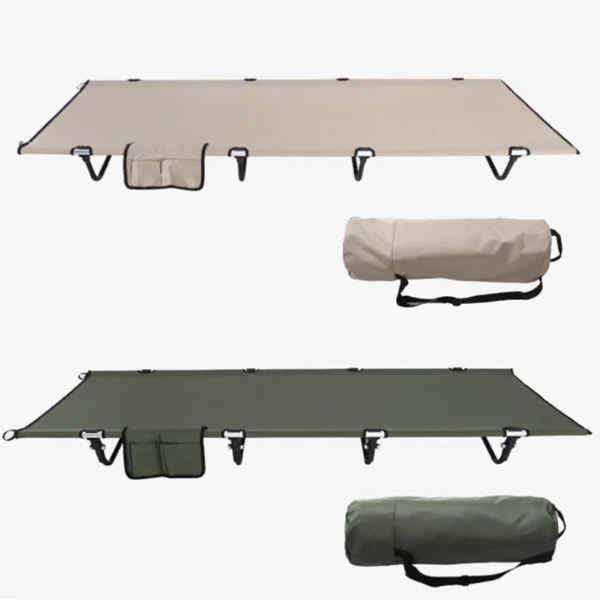
Ultralight 150 kg Camping Cot: Compact, Widened Comfort Bed Rated 5.00 out of 5
$86.18Original price was: $86.18.$60.07Current price is: $60.07.




Product Gallery
-
 VEVOR 550 lb Heavy-Duty Folding Wagon & Bench for Adventurers
$154.27 – $250.78Price range: $154.27 through $250.78
VEVOR 550 lb Heavy-Duty Folding Wagon & Bench for Adventurers
$154.27 – $250.78Price range: $154.27 through $250.78
-
BISINNA One-Touch Titanium Tent for 3-4 Campers, Adventure Ready Rated 4.36 out of 5
$310.23Original price was: $310.23.$216.22Current price is: $216.22. -
Airy Mesh Solo Hiking Tent - Lightweight & Mosquito-Proof Rated 4.71 out of 5
$88.89Original price was: $88.89.$61.95Current price is: $61.95.







 Camping Gear
 Camping Chair
 Camping Table
 Sleeping Bags
 Camping Bed
 Sleeping Gear
 Storage Bags
 BBQ Portable
 Camping Tents
 Gazebos
 Outdoor Cooler
 Cookware
 Power
Power Camping Light
 Flashlight
 Portable Solar
 Power Banks
 Fish Finders
 Fishing Bags
 Fishing Jerseys
 Fishing Reels
 Fishing Chairs
 Fishing Bait Boat
 Fishing Floats
 Hard Baits
 Hiking Vests
 Outdoor Bags
 Water Filters
 Paracord
 Walkie Talkie
 Paddleboards
 Boats
Boats Sea Scooter
 Accessories
 Electric Bike
 Electric Scooter
Recent Comments