

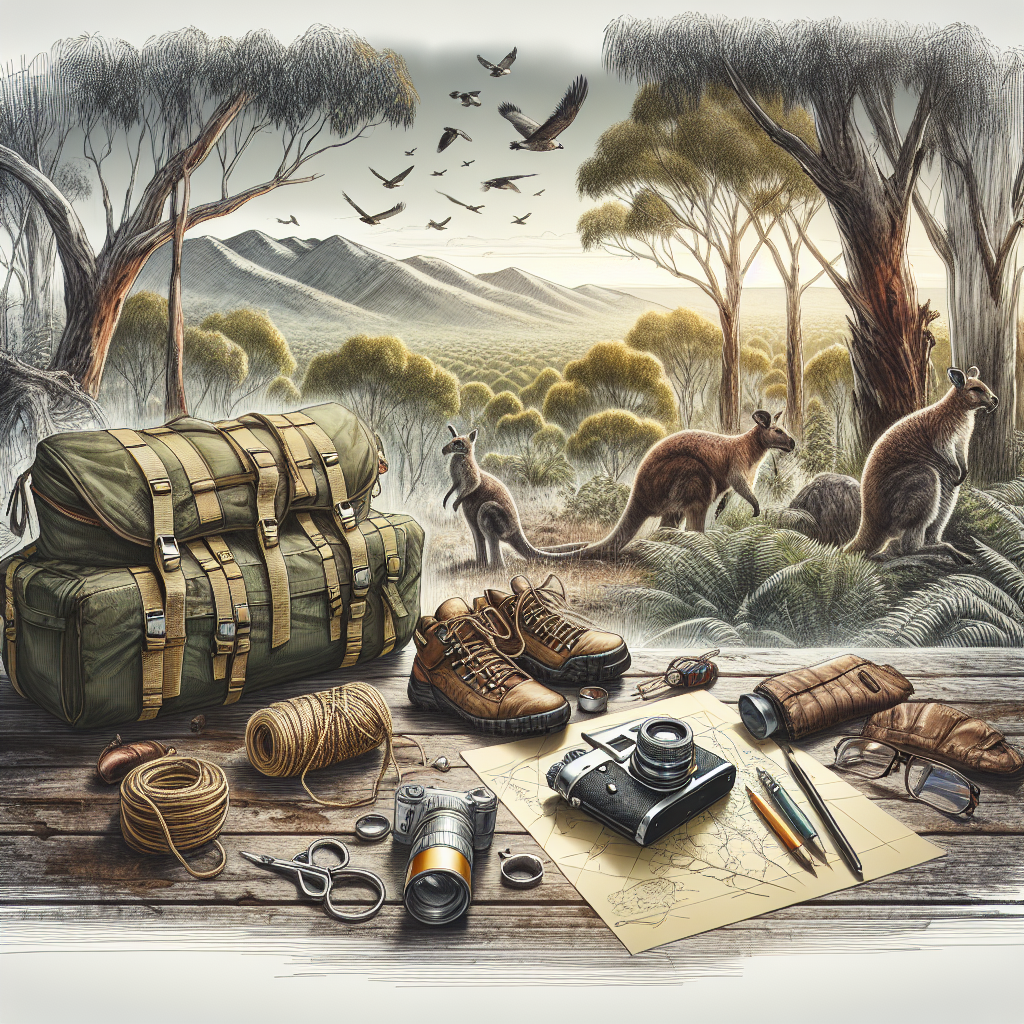
Beyond GPS: Mastering Map and Compass for Safe and Confident Camping

Alright, let’s talk about something crucial for anyone who loves the great outdoors: navigating with a map and compass. In an age where GPS devices dominate, it’s easy to think of these tools as relics. But honestly, relying solely on tech can be a risky game when you’re out in the wilderness. Batteries die, signals get lost, and suddenly you’re… well, you’re relying on something that’s failed you. So, let’s explore why mastering the ancient art of map and compass navigation isn’t just cool, it’s essential for safe and confident camping.
Why Map and Compass? Embracing the Old School Cool
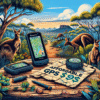
Why bother learning a “primitive” skill when you’ve got a super-smart device in your pocket? Yeah, GPS is great…until it isn’t. Imagine this: You’re deep in the woods, the scenery is breathtaking, but your phone’s battery just blinked its last breath and your GPS unit decided to take a vacation. Now what? That’s where map and compass skills come in. They’re reliable, they don’t need charging, and they give you a deeper understanding of the landscape. Plus, let’s be honest, there’s something deeply satisfying about knowing you can navigate using skills honed over centuries.
Understanding Orienteering Basics: The Lay of the Land
Orienteering is more than just knowing which way is north. It’s about understanding how to read a map, how a compass works, and then how to put those two together to figure out where you are and where you’re going. Ready to get started?
What is a Topographic Map?
A topo map is your window to the world—well, your little corner of it, anyway. Unlike your standard road map, topo maps show the shape and elevation of the terrain using contour lines. Think of contour lines as imaginary lines connecting points of equal elevation. Close together, they mean steep; far apart, gentle slopes. Colors indicate different features, like water (usually blue), vegetation (green), and man-made structures (black or red). Trust me, learning to “read” these maps is like gaining a superpower. It will allow you to predict challenges and adjust your route accordingly.
- Contour Lines: Understand how elevation changes affect your path.
- Colors: Learn what features each color represents.
- Scale: Know how much real-world distance is represented on your map.
Anatomy of a Compass: More Than Just North
Let’s talk compasses. A compass, at its heart, is a simple tool that indicates magnetic north, which allows you to orient yourself in relation to your surroundings and a map. Modern compasses come with many features, but the basic parts you need to know are the baseplate, the magnetic needle, the rotating bezel (or compass housing), and the direction-of-travel arrow (or sighting line). The magnetic needle, usually red-tipped, always points to magnetic north. The rotating bezel is marked with degrees from 0 to 360. Align these components correctly, and you’re golden.
- Baseplate: For placing on your map.
- Magnetic Needle: Points to magnetic north.
- Rotating Bezel: Used for setting your bearing.
- Direction-of-Travel Arrow: Indicates the direction you’re heading.
Taking a Bearing: Finding Your Way
Alright, we’ve got our map and compass. Now what? Taking a bearing involves using your compass to determine the direction from your current location to a landmark or a waypoint on your map. Here’s the rundown:
- Orient the Map: Align your map with your surroundings. If you know you’re on a trail that runs east-west, physically turn the map until the trail on the map aligns with the trail in front of you.
- Locate Your Position: Identify your current location on the map. Look for recognizable features like trail intersections, streams, or distinctive terrain features.
- Set the Bearing: Place the edge of your compass baseplate along the line connecting your current location and your destination on the map.
- Adjust for Declination: Declination is the difference between magnetic north (where your compass points) and true north (the north on your map). This varies by location and needs to be adjusted for accurate navigation.
- Follow Your Bearing: Hold the compass level, turn your body until the red end of the magnetic needle aligns with the orienting arrow, and then follow the direction-of-travel arrow.
Navigating Terrain: Adapting to the Landscape
The terrain itself gives you clues. Learning how to “read” these clues can make you a savvy navigator. Keep an eye out for ridges, valleys, saddles (low points between two high points), and peaks. These features correspond to specific patterns on your topographic map. Also, always be aware of the slope angle and aspect (the direction the slope faces), as they can significantly affect your hiking effort and sun exposure.
Night Navigation: When the Sun Goes Down
Navigating at night introduces a whole new ballgame. Visibility is reduced, landmarks disappear, and the risk of getting disoriented increases. The key here is preparation. Plan your route meticulously before nightfall, noting key landmarks and distances. Use a headlamp with a red light to preserve your night vision. Take frequent compass readings to stay on course, and consider using a pace count to track how far you’ve traveled.
Emergency Navigation: Staying Safe When Things Go Wrong
Sometimes, even with the best preparation, things go sideways. You get lost, the weather turns nasty, or someone gets injured. In these situations, your navigation skills become even more critical.
- Stay Calm: Panic clouds judgment, so take a deep breath and assess the situation.
- Find Your Last Known Location: Use your map and compass to backtrack to a known point if possible.
- Signal for Help: Use a whistle (three blasts is a distress signal) or a mirror to reflect sunlight.
- Build a Shelter: Protect yourself from the elements.
- Conserve Resources: Water is vital, so ration your supplies carefully.
Advanced Techniques: Taking Your Skills to the Next Level
Want to become a navigation ninja? Move beyond the basics.
Using Back Bearings: Confirming Your Position
A back bearing is the reverse of a forward bearing. If you know you’ve passed a specific landmark, taking a back bearing to it can confirm your position. Simply take a bearing towards the landmark, then add 180 degrees (or subtract if the bearing is over 180) to get your back bearing. Now, align your compass with this back bearing, and the landmark should be behind you.
- Take the Forward Bearing: Determine the bearing from your current location to the landmark.
- Calculate the Back Bearing: Add 180 degrees to the forward bearing. If the result is greater than 360 degrees, subtract 360 degrees.
- Align and Verify: Use your compass to align with the back bearing, confirming that the landmark is behind you.
Triangulation: Pinpointing Your Location
Triangulation involves taking bearings to two or three visible landmarks and using those bearings to pinpoint your exact location on the map. Here’s how it works:
- Identify Landmarks: Locate two or three distinct landmarks that you can also identify on your map.
- Take Bearings: Use your compass to take bearings to each of the landmarks.
- Convert to Back Bearings: Convert the bearings to back bearings by adding 180 degrees (or subtracting if over 180).
- Plot on the Map: Draw lines on your map from each landmark along the back bearing. The point where the lines intersect is your approximate location.
Terrain Association: Becoming One With the Land
Terrain association means navigating by continuously relating the features on your map to the actual features you see around you. It’s about constantly asking yourself, “Does what I see match what’s on the map?” This technique requires a deep understanding of topographic maps and the ability to recognize terrain features like ridges, valleys, and saddles.
Essential Navigation Gear: What to Pack
Having the right tools is half the battle. Here’s what should be in your navigation kit:
- Quality Compass: A reliable compass with adjustable declination.
- Topographic Maps: Waterproofed or in a waterproof case.
- Pencil and Paper: For notes and calculations.
- Ruler or Protractor: For precise measurements .
- Headlamp: For night navigation.
- Whistle: For signaling in emergencies.
- First Aid Kit: Just in case something goes wrong.
- Personal Locator Beacon (PLB): For sending out an emergency message.
Practice Makes Perfect: Honing Your Skills
You can read about map and compass techniques all day, but the only way to truly master them is to get out there and practice. Start with easy hikes on well-marked trails, gradually progressing to more challenging terrain. Take every opportunity to use your map and compass, even if you think you don’t need them. And don’t be afraid to make mistakes. Mistakes are learning opportunities in disguise. I always recommend using online resources like REI’s navigation guide for extra learning materials.
Digital Aids: Complements, Not Replacements
Look, I’m not a Luddite. GPS devices and smartphone apps have their place. They’re great for confirming your location, recording your track, and accessing detailed maps on the go. But here’s the deal: they shouldn’t be your only tool. Use them as complements to your map and compass skills, not replacements. Always carry a physical map and compass, and know how to use them, even if your devices are working perfectly.
The Mental Game: Developing a Navigator’s Mindset
Navigation is as much a mental game as it is a physical skill. It requires focus, patience, and the ability to remain calm under pressure. Develop a habit of constantly observing your surroundings, noting key landmarks, and mentally tracking your progress. Cultivate a sense of curiosity and a willingness to learn from your mistakes. And remember, the best navigators aren’t necessarily the smartest or the strongest; they’re the ones who are the most prepared, the most observant, and the most adaptable.
Final Thoughts: Embrace the Journey
Mastering map and compass navigation isn’t just about getting from point A to point B. It’s about connecting with the landscape, challenging yourself, and gaining a deeper understanding of the natural world. It’s about embracing the journey, not just the destination. The National Park Service offers excellent resources on trip planning. So, get out there, explore, and discover the satisfaction of navigating with confidence.
Frequently Asked Questions
DISCLAIMER
The information provided in this article is for general informational purposes only. Camping and navigation in the outdoors can be dangerous activities. Always exercise caution, plan carefully, and be aware of your surroundings. Consult with experienced guides or professionals before attempting any challenging hikes or expeditions. The author and publisher are not responsible for any accidents, injuries, or damages that may occur as a result of using the information provided in this article.
Categories
- Navigation & Safety (68)
- Shelter & Sleep (72)
Top rated products
-
 UNIKOO UK224 Mini Walkie Talkies: Adventure Awaits, Stay Connected! Rated 5.00 out of 5
$49.74Original price was: $49.74.$34.67Current price is: $34.67. -
Nature Bell 185 cm Folding Cot: Comfort On-the-Go Adventure Bed Rated 5.00 out of 5$35.61 – $37.99Price range: $35.61 through $37.99
-
Tactical Mini Flashlight: 150 Lumen Power for Glock & Hellcat Rated 5.00 out of 5
$122.88Original price was: $122.88.$85.65Current price is: $85.65.


Product Gallery
-
 Ultimate 2-3 Person Inflatable Kayak for Fishing Fun Rated 5.00 out of 5
$1,534.01Original price was: $1,534.01.$1,069.16Current price is: $1,069.16. -
VEVOR 550 lb Heavy-Duty Folding Wagon & Bench for Adventurers
$154.27 – $250.78Price range: $154.27 through $250.78
-
Adventure-Ready Ultra Bright LED Headlamp with 3 Modes
$4.62 – $24.86Price range: $4.62 through $24.86








 Camping Gear
 Camping Chair
 Camping Table
 Sleeping Bags
 Camping Bed
 Sleeping Gear
 Storage Bags
 BBQ Portable
 Camping Tents
 Gazebos
 Outdoor Cooler
 Cookware
 Power
Power Camping Light
 Flashlight
 Portable Solar
 Power Banks
 Fish Finders
 Fishing Bags
 Fishing Jerseys
 Fishing Reels
 Fishing Chairs
 Fishing Bait Boat
 Fishing Floats
 Hard Baits
 Hiking Vests
 Outdoor Bags
 Water Filters
 Paracord
 Walkie Talkie
 Paddleboards
 Boats
Boats Sea Scooter
 Accessories
 Electric Bike
 Electric Scooter
Recent Comments