

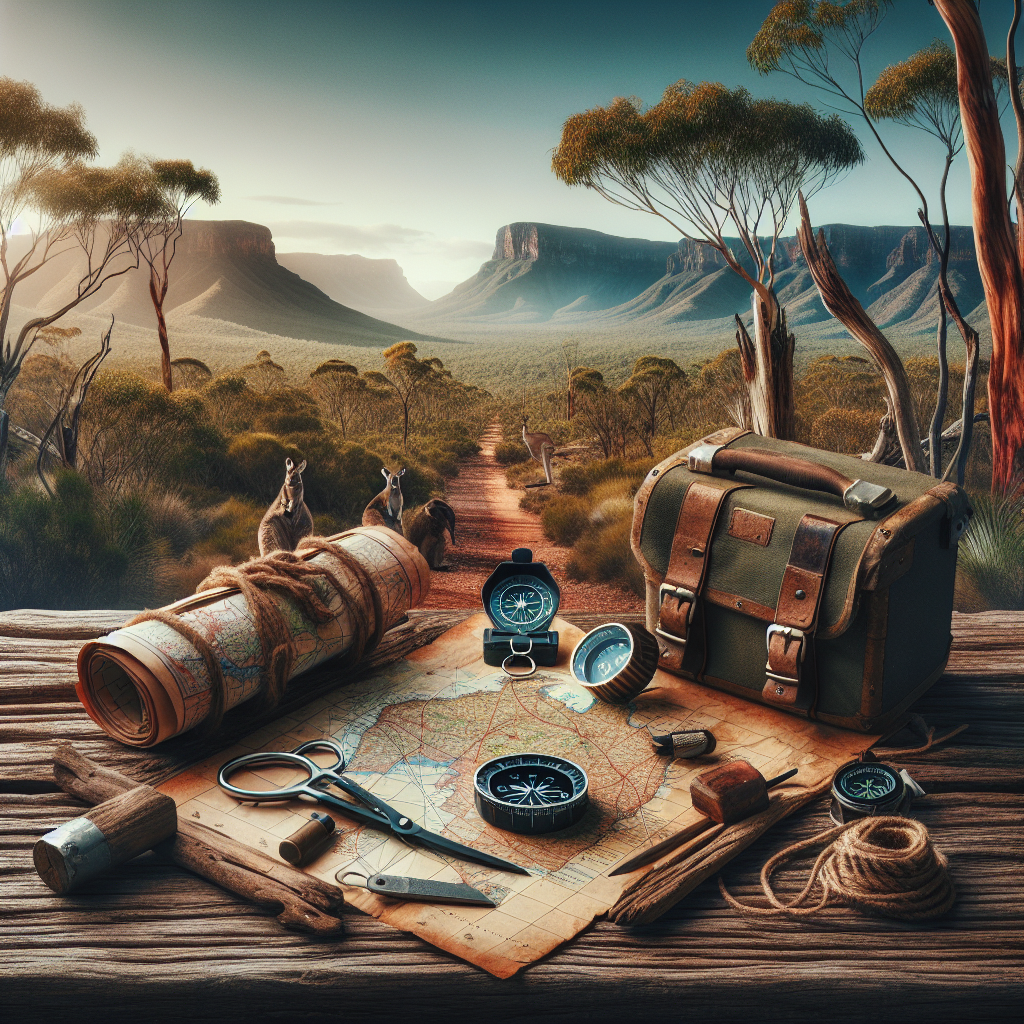

There’s something magical about venturing into the backcountry. It’s that feeling of freedom, the crisp, clean air, and the sheer adventure of exploring uncharted territory, isn’t it? But let’s be honest: getting lost out there is no fun. That’s where good ol’ map and compass skills come in. Forget relying solely on your phone, which can die or lose signal. Knowing how to use a map and compass is essential for any camper who wants to stay safe and truly enjoy their wilderness experience. This guide will walk you through everything you need to know – from the absolute basics to some more advanced techniques. So, grab your gear, and let’s get started!
Why You Can’t Just Rely on Your Phone (Seriously!)
Look, I get it. We live in a digital age. Phones are amazing. But relying solely on your phone for navigation out in the wilderness is a gamble that can have serious consequences. Think about it: batteries die, screens crack, reception vanishes faster than free pizza at a conference. Plus, GPS drains power like crazy when you’re out of cell range! Ever hiked somewhere with no signal? It’s more common than you think. And trust me, Murphy’s Law applies double when you’re miles from civilization. Even a power bank can give up on you, and you don’t want to be stuck with it.
Beyond the technical limitations for your phone, there’s environmental impact. Cold weather zaps battery life faster. Dense forests can block GPS signals and cell towers. The terrain itself affects signal strength, too. Maps and compass don’t care about that; they work no matter the weather, terrain, or signal strength. Consider also that constantly checking your phone distracts you from the surroundings; you might miss important wildlife warnings, trail markers, or simply the beauty around you. Using a map and compass forces you to pay attention, making you a more aware and engaged hiker.
Understanding the Anatomy of a Topographic Map (And Why It Matters)
Maps: they’re not just pretty pictures. A topographic map is a detailed representation of an area’s terrain, complete with elevation changes, natural features (like rivers and forests), and man-made structures (like roads and trails). They are like specialized treasure maps, if the treasure is “not getting lost.”
Key Map Features Explained
Let’s break down the essential parts:
- Contour Lines: These lines connect points of equal elevation. Close lines mean steep terrain; wider spacing indicates gentler slopes. Imagine water filling a valley; each contour line shows where the shoreline would be at different water levels.
- Legend: This explains the symbols and colors used on the map. It’s your key to understanding what you’re looking at. Without the legend, you’re basically just staring at a bunch of lines and colors.
- Scale: This shows the relationship between distances on the map and corresponding distances on the ground. A scale of 1:24,000 (a common USGS topographic map scale) means that one inch on the map equals 24,000 inches (or 2,000 feet) on the ground.
- North Arrow: Indicates the direction of true north (geographic north). Crucial for orienting your map correctly and accurately taking bearings. Remember this isn’t always magnetic north, which the compass points too.
Reading Contour Lines Like a Pro
Contour lines can tell you so much more than just elevation. They reveal the shape of the land. Concentric circles usually indicate a hilltop or mountain. U-shaped lines pointing uphill indicate a valley or draw. V-shaped lines pointing downhill indicate a ridge. Be aware that close contour lines mean a steep climb, so plan accordingly! Understanding these patterns allows you to visualize terrain and predict what you’ll encounter on your hike. This is where the magic really starts!
Your Trusty Companion: Getting to Know Your Compass
The compass: a simple tool, but incredibly powerful. At its core, it’s a magnetic needle floating on a pivot, aligning itself with the Earth’s magnetic field. But there’s more to it than just that. There are different kinds of compasses, with different key features to learn about.
Parts of a Compass: A Quick Tour
- Baseplate: The clear plastic base that the compass housing sits on. It’s got a straight edge for taking bearings and often has a ruler printed on it.
- Magnetic Needle: The part that always (should) point north. It’s usually red on the north end. If yours points south, you might be near a powerful magnetic anomaly!
- Rotating Bezel (or Compass Housing): The rotating ring around the needle. It’s marked with degrees (0-360) and often cardinal directions (N, S, E, W).
- Orienting Arrow: This is fixed arrow inside the compass housing that you align with the magnetic needle when taking a bearing.
- Index Line: The line at the top of the compass you read your bearing from.
Declination: The Sneaky Truth About North
Here’s the catch: True north (geographic north, the North Pole) and magnetic north (where your compass needle points) aren’t usually in the same place. The angle between them is called declination, and it varies depending on your location. Declination can be east or west, meaning magnetic north is either to the east or west of true north. Not accounting for declination can throw off your bearings significantly, leading you astray. How much? Here’s the thing: in some places, it’s only a degree or two, but in others, it can be quite significant. Always find the declination for your region (many maps will tell you or search online) and adjust your compass accordingly.
Okay, now you might ask: how do I adjust for it? Some compasses have adjustable declination scales. If yours does, great! Set it to your local declination. If not, you’ll need to manually add or subtract the declination when taking bearings. This is one of those things that seems complicated at first but becomes second nature with practice. Pro tip: write the declination for your area on your compass with a permanent marker. Just check it regularly, because declination changes over time!
Orienting Your Map: The Cornerstone of Navigation
Orienting your map means aligning it with the real-world terrain around you. It makes everything else easier. If you skip this step, you’re basically wandering around with a pretty piece of paper that may as well be an abstract painting.
How to Properly Orient Your Map
- Lay the Map Flat: Find a relatively flat surface – the ground, a rock, your handy camp table.
- Find Your Location: Identify your current location on the map. Look for distinctive landmarks like a trail junction, a stream crossing, and large rock.
- Align Map with Terrain: Rotate the map so that features on the map (like that stream or mountain peak) line up with the same features in the real world.
- Use Your Compass (Optional, but recommended): Place your compass on the map. Rotate the map until the north end of the compass needle points to the north on the map, accounting for declination.
Why Orientation is Crucial
Once your map is oriented, you can easily identify surrounding features, plan your route, and track your progress. It transforms the map from a confusing array of lines and symbols into a representation of your actual surroundings. You’ll be able to say, “Okay, I’m here, that mountain is over there, and the trail goes that way,” instead of just guessing. It’s about understanding where you are in relation to everything else.
Taking a Bearing: Your Pathfinding Superpower
Taking a bearing is the process of determining the direction from your current location to a destination on the map. It involves using your compass to find the angle between magnetic north and your target. This is your pathfinding superpower and prevents you from going around in circles. Honestly, this is where the fun begins.
Step-by-Step Guide to Taking a Bearing
- Identify Your Target: Locate your destination on the map. This could be anything from a mountain peak to a trail junction to your campsite.
- Place Compass on Map: Lay the compass on the map with the straight edge of the baseplate aligned with the line between your current location and your target destination.
- Rotate the Bezel: Rotate the compass housing until the orienting arrow lines up with the north end of the magnetic needle (remember to account for declination).
- Follow the Bearing: Remove the compass from the map and hold it level in front of you. Rotate your body until the north end of the magnetic needle lines up with the orienting arrow again. The direction of travel arrow on the baseplate now points toward your destination.
Pro Tips for Accurate Bearings
- Hold the Compass Steady: A shaky compass leads to inaccurate readings. Use a steady hand or rest the compass on a stable surface.
- Avoid Magnetic Interference: Metal objects can interfere with the compass needle. Remove knives, cell phones, and anything metallic from your pockets.
- Take Multiple Bearings: If possible, take bearings from different locations to confirm your direction.
Walking on a Bearing: Staying True to Your Course
Taking a bearing is only half the battle. You also need to know how to follow that bearing in the real world. This involves paying attention to your compass, the terrain, and any obstacles in your path. You know what, that’s easier said than done.
Maintaining Your Course
- Choose a Landmark: After taking your bearing, look for a visible landmark along that line of travel. This could be a distinctive tree, a rock formation, or a distant peak. Walk towards that landmark.
- Recheck Your Bearing: Once you reach the landmark, recheck your bearing and choose a new landmark to walk towards. Repeat as needed.
- Circumvent Obstacles: If you encounter an obstacle (like a swamp or a steep cliff), walk around it while maintaining a count of your steps. Once you’ve cleared the obstacle, resume walking on your original bearing.
- Stay Aware of Your Surroundings: Constantly monitor your progress and compare it to your map. Look for changes in terrain, trail conditions, or weather.
Walking on a bearing isn’t just about following a direction; it’s about staying vigilant and adapting to the unexpected. It sounds simple, but requires constant attention and adjustment. Think about it: the wilderness isn’t a straight line but a maze of obstacles!
Triangulation: Pinpointing Your Exact Location
Triangulation is a technique for determining your exact location on a map by taking bearings to two or three visible landmarks. It’s like creating a GPS fix manually. This isn’t something you’ll do every day, but it’s invaluable when you’re unsure of your position. Believe me, it happens to the best of us.
How to Triangulate Like a Pro
- Identify Two or Three Landmarks: Choose prominent features you can easily identify on the map, like mountain peaks, distinctive rock formations, or trail intersections.
- Take Bearings to Each Landmark: Use your compass to take bearings to each of the landmarks chosen.
- Convert Bearings to Back Azimuths: Convert each bearing to a back azimuth by adding 180 degrees if the bearing is less than 180 degrees, or subtracting 180 degrees if the bearing is more than 180 degrees.
- Draw Lines on the Map: Locate the landmarks on your map. Using a protractor or the compass baseplate, draw a line along the back azimuth from each landmark.
- Find the Intersection: The point where the lines intersect is your approximate location. If the lines don’t intersect perfectly, you’re likely in the triangle or polygon they form. Accuracy depends on careful bearings and precise map reading.
Triangulation is a skill that improves with practice, and can come in handy if you’re ever truly lost or unsure of your location. Treat it like a puzzle; it hones your observation capabilities and map reading skills in one go!
Advanced Techniques: Taking Your Skills to the Next Level
Okay, so you’ve mastered the basics. Now it’s time to up your navigation game with some advanced techniques. These aren’t essential for every hike, but they can be incredibly useful in challenging terrain or when you want to push your skills further.
Terrain Association: Reading the Land Like a Book
Terrain association is the art of using natural features – like streams, ridges, and vegetation changes – to navigate. It means constantly comparing what you see on the map with what you see around you. It’s about developing a deep understanding of how the landscape is represented on paper and how it translates to the real world. If you know a trail follows the base of a ridge, you should expect to see the ridge. If the map shows a stream crossing, you need to watch out for the stream. It’s about constant confirmation.
You can also use terrain to anticipate challenges along the way. Close contour lines indicate steep terrain, which will take longer to hike than gentle ground. Changes in vegetation can signal different soil types, water availability, or microclimates. With experience, you’ll start to anticipate what’s coming next simply by reading the land. This is where navigation becomes intuitive, a true melding of your senses and your map.
Using a GPS as a Backup (Not a Replacement!)
Yes, I know I told you not to rely on your phone’s GPS but modern GPS devices can be powerful tools to have as a backup. They can save your bacon. A handheld GPS unit can provide accurate location data, track your route, and store waypoints. But here’s the key: treat it as a backup, not a replacement for your map and compass skills. Always bring a map and compass, know how to use them, and only use the GPS to supplement your navigation.
Use your GPS to confirm your location, double-check your bearings, or record your route. But don’t become overly reliant on it. Batteries die, screens break, and GPS signals can be lost in dense forests or deep canyons. A GPS complements your map and compass skills, it doesn’t replace them. Think of it as a safety net, a reassurance.
Practice Makes Perfect: Honing Your Skills at Home and in the Field
Navigation isn’t something you can learn solely by reading about it. You need to practice – a lot. The more time you spend using a map and compass, the more comfortable and confident you’ll become, and the more likely you will use them if things go wrong! So, let’s look at how to get enough practice…
Start Simple: Practice in Your Backyard or Local Park
You don’t need to venture far into the wilderness to practice your skills. Start in your backyard or local park. Grab a map of the area, orient it, and try to identify landmarks. Take bearings to different objects and walk on those bearings. Practice triangulation by taking bearings to different landmarks. Get comfortable with the basic techniques before you head out into the backcountry.
Create Navigation Exercises for Yourself
Make up navigation exercises to challenge yourself. Create a simple orienteering course in your backyard, hiding objects and using bearings to find them. Plan a route through your local park, using only a map and compass to navigate. The more you practice, the more your skills will become second nature. This is how you build confidence and proficiency.
Head Out on Day Hikes with a Map and Compass
The best way to hone your navigation skills is to use them in the field. Take a map and compass on your next day hike, even if you know the trail well. Practice orienting the map, taking bearings, and following a specific route. Over time, you’ll develop a feel for the terrain and improve your ability to navigate accurately. Treat every hike as a learning opportunity.
Safety First: Essential Considerations for Wilderness Navigation
Navigation is about more than just getting from point A to point B; it’s also about staying safe. A competent navigator is an alert navigator, someone who understands the potential hazards of the backcountry and takes steps to mitigate them. This is where planning is paramount.
Plan Your Route Meticulously
Before you head out on any camping trip, carefully plan your route. Study the map, identify potential hazards (like steep terrain or river crossings), and estimate how long it will take to hike each section. Share your plans with someone and let them know when you expect to return. A well-planned route is less likely to encounter unexpected and potentially dangerous situations.
Be Aware of Weather Conditions
Weather can change rapidly in the mountains. Check the forecast before you leave and be prepared for all types of conditions. Rain, snow, and fog can significantly reduce visibility and make navigation more challenging. If the weather turns bad, don’t hesitate to turn around. It’s better to be safe than sorry. Remember those weather apps I told you not to rely on, they still have a place to see what may be coming your way.
Carry Essential Safety Gear
In addition to a map and compass, always carry essential safety gear, including a first-aid kit, a headlamp or flashlight, extra food and water, a fire starter, and a whistle. These items can be critical in an emergency. I advise you to learn basic survival skills and know how to use your safety gear. You can take courses on this or find reliable experts online. A GPS communicator that works without cell service can also be a lifesaver.
Embrace the Journey: Why Map and Compass Skills Enhance Your Camping Experience
Learning to navigate with a map and compass isn’t just about safety; it’s about enriching your camping experience. It connects you to the land in a way that simply following a GPS track never will. It empowers you to explore with confidence, knowing that you have the skills to find your way, no matter what. Ultimately it is about expanding your comfort zone and really feeling like you can tackle anything the wild throws at you.
The next time you head out into the wilderness, leave the phone in your backpack. Embrace the challenge of navigating with a map and compass. You’ll discover a new level of appreciation for the beauty and complexity of the natural world. And who knows, you might even discover something about yourself along the way! This is the true treasure map and compass brings: the adventure within.
Frequently Asked Questions (FAQ)
Categories
- Navigation & Safety (68)
- Shelter & Sleep (72)
Top rated products
-
 Effortless Power: 20 W Solar Charger for Blink Outdoor Cameras Rated 5.00 out of 5
$45.66Original price was: $45.66.$31.82Current price is: $31.82. -
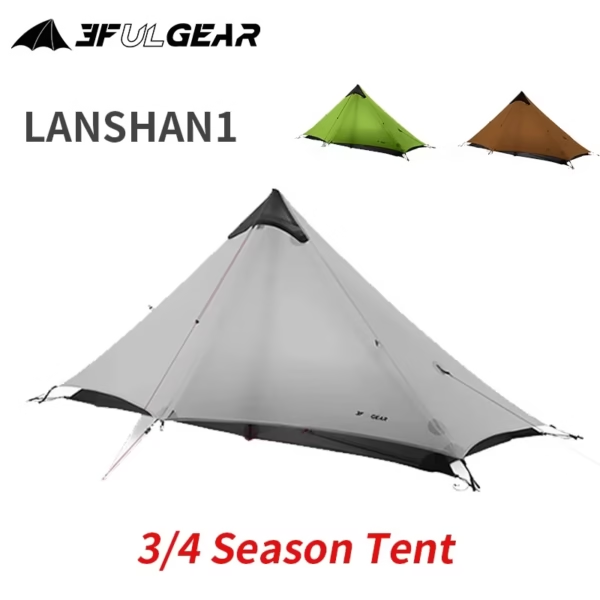
Ultralight 3 F UL GEAR Lan Shan 1 Tent for Solo Adventures Rated 5.00 out of 5
$359.23Original price was: $359.23.$250.38Current price is: $250.38. -
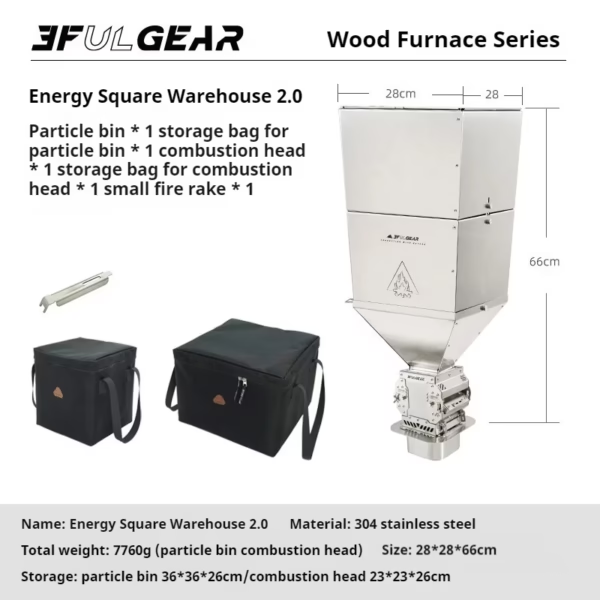
Ultimate 3 F UL GEAR 2.0 Stainless Steel Pellet Fuel Hopper Rated 5.00 out of 5
$555.43Original price was: $555.43.$387.12Current price is: $387.12.



Product Gallery
-
 Ultimate 2-3 Person Inflatable Kayak for Fishing Fun Rated 5.00 out of 5
$1,551.37Original price was: $1,551.37.$1,081.26Current price is: $1,081.26. -
VEVOR 550 lb Heavy-Duty Folding Wagon & Bench for Adventurers
$156.01 – $253.61Price range: $156.01 through $253.61
-
Adventure-Ready Ultra Bright LED Headlamp with 3 Modes
$4.67 – $25.14Price range: $4.67 through $25.14












 Camping Gear
 Camping Chair
 Camping Table
 Sleeping Bags
 Camping Bed
 Sleeping Gear
 Storage Bags
 BBQ Portable
 Camping Tents
 Gazebos
 Outdoor Cooler
 Cookware
 Power
Power Camping Light
 Flashlight
 Portable Solar
 Power Banks
 Fish Finders
 Fishing Bags
 Fishing Jerseys
 Fishing Reels
 Fishing Chairs
 Fishing Bait Boat
 Fishing Floats
 Hard Baits
 Hiking Vests
 Outdoor Bags
 Water Filters
 Paracord
 Walkie Talkie
 Paddleboards
 Boats
Boats Sea Scooter
 Accessories
 Electric Bike
 Electric Scooter
Recent Comments