

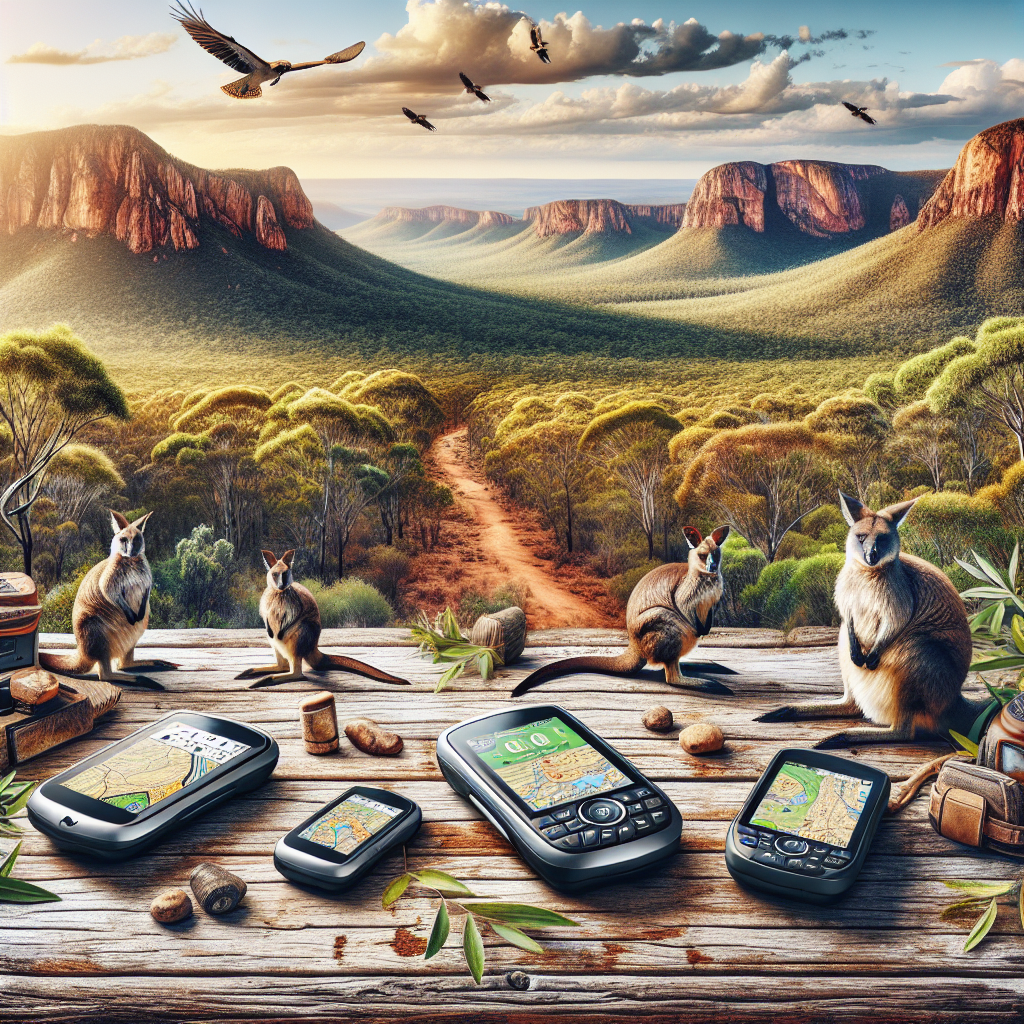
From Map to Reality: Top GPS Devices That Elevate Your Camping Experience

Ever feel that pull, that urge to wander off the grid, just you and nature? Camping does that to a lot of us. But let’s be real, wandering into the wilderness isn’t just about Instagram-worthy landscapes and campfire stories. It’s about knowing where you are, where you’re going, and how to get back safely. That’s where GPS devices become not just handy gadgets, but essential tools.
Why GPS is Your Best Friend in the Backcountry
Forget paper maps and compasses for a second, though those are still good skills to have. GPS devices? They’re like having a tiny, satellite-connected sherpa in your pocket. Want to pinpoint your exact location, even under dense tree cover? GPS can do it.
Planning a multi-day trek? Load your routes and waypoints. Concerned about changing weather? Many GPS units can give you real-time updates. Seriously, these things are game-changers. They bring a level of confidence and safety that can really elevate your entire camping experience. Think of it like this: would you rather guess how far you’ve hiked or *know* you’ve covered 7.3 miles and have 2.1 left to your campsite? Exactly.
What to Look For: GPS Features That Matter
Okay, so you’re sold on the idea. But what makes one GPS device better than another? What features should you look for? It’s not all just about the screen size, folks. Here’s a quick rundown:
- Accuracy: How close does it get to your actual location? Look for devices with high sensitivity receivers (think WAAS or EGNOS).
- Battery Life: Crucial! Days in the backcountry demand extended power. Consider models with replaceable batteries or power-saving modes. No one wants a dead GPS halfway up a mountain, right?
- Durability: Camping is rough. Your GPS needs to withstand drops, rain, and temperature swings. Waterproof ratings (like IPX7) are your friend.
- Preloaded Maps & Storage: Does it come with detailed topographic maps? Can you add more? Make sure it covers the areas you plan to explore, or that you can load your own.
- User Interface: Is it easy to use, even with gloves on? Can you quickly navigate menus and find what you need? Simplicity can be a lifesaver.
- Connectivity: Bluetooth and Wi-Fi can be super useful for transferring data, getting weather updates, or sending SOS messages.
Top GPS Devices for Camping: Our Recommendations
Alright, let’s get to the good stuff. I’ve tested (and occasionally abused) a whole bunch of GPS devices over the years. Here are some of my top picks, broken down by category, to help you find the best fit for your adventures.
For the Serious Backpacker: Garmin GPSMAP 66i
This isn’t your entry-level gadget. The Garmin GPSMAP 66i is a rugged, feature-packed powerhouse designed for serious backcountry navigation and communication. It boasts:
- inReach Technology: Two-way messaging via satellite, SOS capabilities, and weather forecasts, no matter where you are.
- Preloaded Topo Maps: Detailed maps of the U.S. and Canada, with options to download more.
- Long Battery Life: Up to 35 hours in 10-minute tracking mode.
- Robust Build: Built to military standards (MIL-STD-810G) for thermal, shock, and water resistance.
It’s an investment, no doubt. But if you frequently venture far from civilization, the peace of mind it provides is priceless. Honestly, the ability to send a message to loved ones or call for help in an emergency is reason enough to consider it.
For the Budget-Conscious Explorer: Garmin eTrex 10
Don’t let the low price fool you. The Garmin eTrex 10 is a reliable, no-frills GPS that gets the job done. It’s perfect for beginners or anyone who wants a simple, dependable device without breaking the bank.
- Simple Interface: Easy to learn and use, even for those new to GPS navigation.
- Worldwide Basemap: Provides basic geographic data for navigation anywhere in the world.
- Long Battery Life: Up to 25 hours on two AA batteries.
- Durable Construction: Withstands splashes, dirt, and basic outdoor conditions.
It lacks fancy features like color screens or preloaded topo maps, but it’s a solid entry point into the world of GPS navigation. Plus, it’s so lightweight and compact, you’ll barely notice it in your pack.
For the Tech-Savvy Adventurer: Gaia GPS (on your Smartphone)
Okay, this isn’t a dedicated GPS device, but hear me out. Your smartphone, with the right app, can be a surprisingly powerful navigation tool. Gaia GPS is widely regarded as one of the best outdoor navigation apps available.
- Extensive Map Library: Access a vast library of topographic, satellite, and road maps from around the world.
- Offline Use: Download maps for offline use, so you can navigate even without cell service.
- Recording & Tracking: Record your tracks, add waypoints, and analyze your performance.
- Community Features: Share your adventures and discover new routes from other users.
The downside? Smartphone batteries drain quickly, and they’re not as rugged as dedicated GPS units. But with a good power bank and a waterproof case, a smartphone running Gaia GPS can be a very capable and versatile navigation solution. (Just don’t forget to download those maps *before* you leave cell service! Trust me on this one.)
Learn more about Gaia GPS here.
For the Mountaineer or Expeditioner: Suunto 9 Peak Pro
If you’re pushing limits in extreme environments, the Suunto 9 Peak Pro is built to endure. This watch-style GPS offers a blend of ruggedness, accuracy, and advanced features for mountaineering and expeditions.
- Barometric Altimeter: Provides accurate altitude readings, essential for navigating in mountainous terrain.
- Long Battery Life: Up to 40 hours in GPS mode, and up to 300 hours in tour mode.
- Route Navigation: Follow preloaded routes and get turn-by-turn directions.
- Extremely Durable: Sapphire glass and titanium bezel ensure it can withstand harsh conditions.
It’s more than just a GPS; it’s a complete adventure companion, tracking your heart rate, sleep, and overall fitness. Think of it as your personal Everest guide, strapped to your wrist.
Beyond the Device: Navigation Skills You Still Need
Here’s the thing, while GPS gadgets are amazing, they are not a replacement for good ol’ fashioned know-how. What happens if those batteries die? Backcountry navigation isn’t just about pushing buttons, okay? Learn these skills, and you’ll be prepared for anything:
- Map Reading: Understand topographic maps, contour lines, and map symbols.
- Compass Skills: Know how to take a bearing, orient your map, and navigate using a compass.
- Terrain Association: Learn to recognize landmarks and natural features to orient yourself.
- Weather Awareness: Understand how weather patterns affect navigation and safety.
- Emergency Procedures: Know what to do in case of getting lost or injured.
Seriously, take a navigation course. Practice with a map and compass. Being able to find your way without relying on technology is empowering (and potentially life-saving).
Maximizing Battery Life: Tips and Tricks
Few things are more annoying than a dead GPS when you need it most. Extend your GPS battery life with some of these simple tricks:
- Carry Extra Batteries: Sounds obvious, but always have spares, especially on longer trips.
- Use Power Saving Mode: Most GPS devices have power-saving modes that reduce screen brightness and GPS sampling frequency to conserve battery.
- Turn Off Unnecessary Features: Disable Bluetooth, Wi-Fi, and other features when you don’t need them.
- Store Your GPS Properly: Keep it warm in cold weather (close to your body) and out of direct sunlight in hot weather.
- Consider a Solar Charger: A portable solar charger can be a lifesaver on extended trips.
I mean, doesn’t it make sense to do all you can to conserve power? Your GPS is only as good as its battery life.
Maintaining Your GPS: Keeping It in Tip-Top Shape
A little TLC goes a long way. Keep the GPS in good shape, and it’ll serve you well for years to come.
- Clean It Regularly: Wipe off dirt, mud, and water with a soft cloth.
- Protect the Screen: Use a screen protector to prevent scratches.
- Store It Properly: When not in use, store it in a case or pouch to protect it from damage.
- Update the Software: Keep the firmware and software up to date to ensure optimal performance.
- Check the Battery Compartment: Make sure the battery contacts are clean and free of corrosion.
Real-Life Stories: GPS Saves the Day
I could give you abstract reasons all day, but there is nothing like real life stories.
I’ve heard stories from park rangers about lost hikers getting found by tracking their GPS signal. I’ve had friends who got turned around in whiteout conditions on the mountain and managed to navigate back to safety using their GPS. I even recall a trip I took where our cooking stove broke. Because I was able to send a text message using the Garmin inReach I was able to coordinate an early trip back so we didn’t go hungry.
These aren’t just anecdotes. GPS technology has genuinely saved lives in the backcountry, time and time again.
Learn more about how the National Parks Service uses GPS technology.
Final Thoughts: Embrace the Technology, Respect the Wild
GPS devices are incredible tools that can enhance your camping experience and make you a safer, more confident explorer. But remember, they’re not magic wands. Learn the fundamentals of navigation, practice your skills, and always respect the power and unpredictability of the wilderness. With the right knowledge and the right gear, you can explore with confidence and create memories that will last a lifetime.
Frequently Asked Questions
Handheld GPS devices are generally accurate within 3 to 10 meters under open skies. Accuracy can be affected by factors like tree cover, buildings, and atmospheric conditions. Devices that support WAAS (Wide Area Augmentation System) or EGNOS (European Geostationary Navigation Overlay Service) can improve accuracy.
While GPS devices are incredibly useful, it’s not wise to rely solely on them. Always carry a map and compass and know how to use them. Batteries can die, devices can fail, and technology isn’t always reliable in remote areas. Back up systems are critical for ensuring safety.
The IPX rating (Ingress Protection) indicates how well a device is protected against water. For example, IPX7 means the device can withstand immersion in water up to 1 meter for 30 minutes. Choose a device with a sufficient IPX rating based on the conditions you expect to encounter.
The process for loading custom maps varies depending on the device. Generally, you’ll need to connect your GPS to a computer and use the manufacturer’s software or a compatible program to transfer the map files. Refer to your device’s manual for specific instructions.
Smartphone GPS apps can be very good, offering extensive map options and features. However, they rely on your phone’s battery and may not be as rugged or weather-resistant as dedicated GPS devices. Consider the trade-offs and choose based on your specific needs and the environment you’ll be in.
Cold weather can significantly reduce battery life. Keep your GPS warm by storing it close to your body. Use lithium batteries, as they perform better in cold temperatures. Consider an insulated case to further protect the device from the cold.
It’s a good idea to update the maps on your GPS device at least once a year, or more frequently if you’re traveling to areas with known changes in terrain or infrastructure. Updated maps ensure you have the most accurate and current information for navigation.
DISCLAIMER
Please note that while GPS devices enhance safety and navigation, they are not foolproof. Always exercise caution and common sense when exploring the outdoors. Weather conditions can change rapidly, and terrain can be unpredictable. Be sure to inform someone of your hiking plans, carry emergency supplies, and understand your own limitations. Relying solely on technology can be dangerous, and you should always be prepared to navigate using traditional methods when necessary. The recommendations in this article are based on general knowledge and experience, and you should consult with experts and conduct thorough research before undertaking any backcountry adventure. Your safety is your responsibility.
Categories
- Navigation & Safety (68)
- Shelter & Sleep (72)
Top rated products
-
 Dune 7.6 Ultralight 2-Person Tent for All-Season Adventures Rated 5.00 out of 5$113.63 – $120.74Price range: $113.63 through $120.74
 -
Nature Bell 185 cm Folding Cot: Comfort On-the-Go Adventure Bed Rated 5.00 out of 5$36.04 – $38.44Price range: $36.04 through $38.44
-
Revolutionary 7" HD Underwater Fishing Camera with LED Lights Rated 5.00 out of 5$164.55 – $208.98Price range: $164.55 through $208.98



Product Gallery
-
 Ultimate 2-3 Person Inflatable Kayak for Fishing Fun Rated 5.00 out of 5
$1,552.46Original price was: $1,552.46.$1,082.01Current price is: $1,082.01. -
VEVOR 550 lb Heavy-Duty Folding Wagon & Bench for Adventurers
$156.12 – $253.79Price range: $156.12 through $253.79
-
Adventure-Ready Ultra Bright LED Headlamp with 3 Modes
$4.67 – $25.16Price range: $4.67 through $25.16









 Camping Gear
 Camping Chair
 Camping Table
 Sleeping Bags
 Camping Bed
 Sleeping Gear
 Storage Bags
 BBQ Portable
 Camping Tents
 Gazebos
 Outdoor Cooler
 Cookware
 Power
Power Camping Light
 Flashlight
 Portable Solar
 Power Banks
 Fish Finders
 Fishing Bags
 Fishing Jerseys
 Fishing Reels
 Fishing Chairs
 Fishing Bait Boat
 Fishing Floats
 Hard Baits
 Hiking Vests
 Outdoor Bags
 Water Filters
 Paracord
 Walkie Talkie
 Paddleboards
 Boats
Boats Sea Scooter
 Accessories
 Electric Bike
 Electric Scooter
Recent Comments