

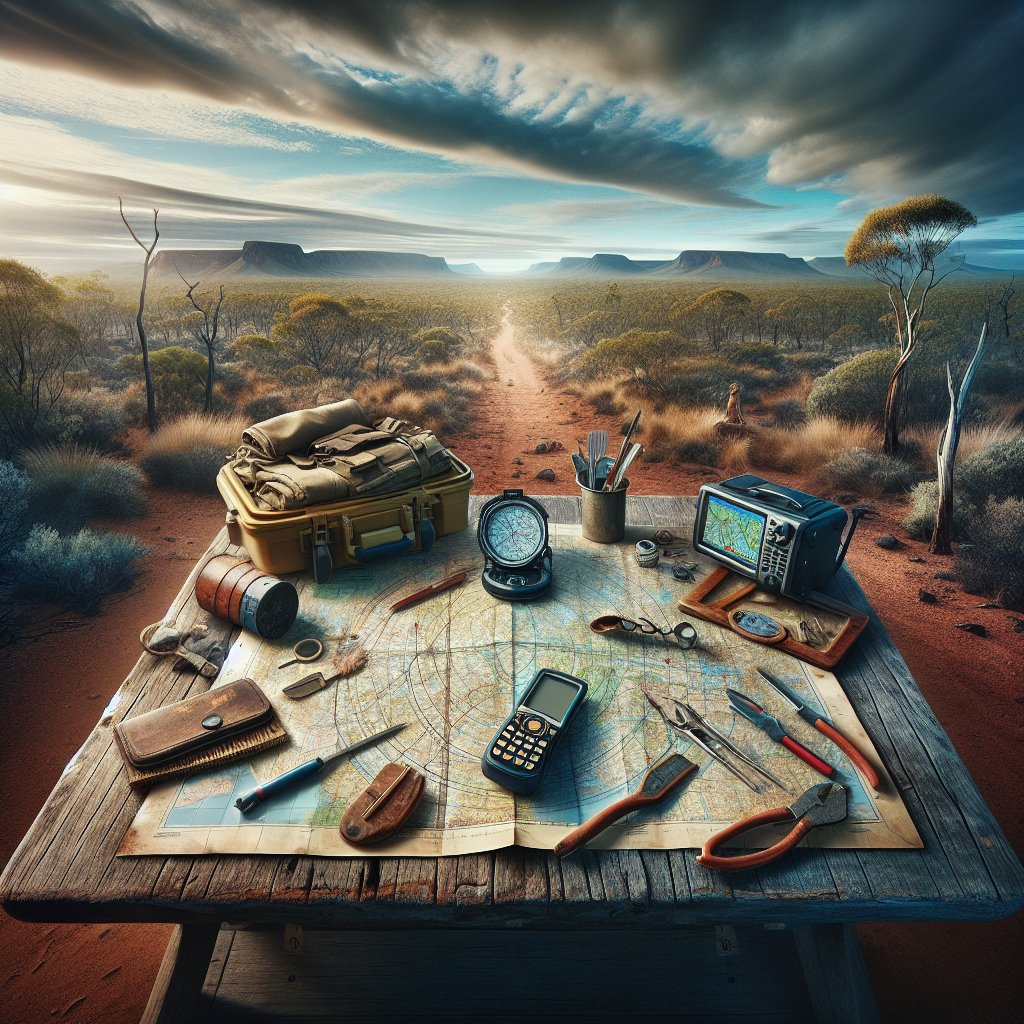
GPS vs. Map: Choosing the Right Navigation for Beginner Campers

<!DOCTYPE html>
<h1>GPS vs. Map: Choosing the Right Navigation for Beginner Campers</h1>
<p>So, you're venturing into the great outdoors? Awesome! But before you strap on those boots and hit the trail, let's talk about something crucial: navigation. Getting lost isn't just a minor inconvenience; it can quickly turn into a serious – even scary – situation. That's why understanding the basics of navigation is absolutely paramount, especially for beginner campers.</p>
<p>The age-old debate? GPS or map and compass. Which is better? Well, the truth is, neither option is universally "better." It really depends on your experience level, the terrain you're tackling, and, honestly, your personal preference. Let's break down the pros and cons of each, so you can make an informed decision and stay safe out there.</p>
<h2>Understanding the Basics: Why Navigation Matters</h2>
<p>Why dedicate time and energy to understanding navigation? Because the wilderness, as beautiful as it is, can be unforgiving. Relying solely on luck is, well, not a great strategy. Effective navigation isn’t just about getting from point A to point B; it’s about ensuring your safety, preserving your resources, and maximizing your enjoyment of the natural world.</p>
<p>Think about it: a wrong turn could lead you miles off course, draining your energy and potentially exposing you to hazards like unpredictable weather, dangerous wildlife, or difficult terrain. Having solid navigation skills gives you the confidence to explore further and the ability to handle unexpected situations with grace. We all know that one wrong turn can lead to a long day, and that’s why being prepared is key.</p>
<h2>The Allure of GPS: Convenience and Technology</h2>
<p>GPS devices are undeniably appealing. They’re sleek, packed with features, and remarkably user-friendly—at least on the surface. With a GPS, you can pinpoint your exact location, track your progress, and follow pre-loaded routes with ease. It feels like having a digital safety net in your pocket. But before you become completely reliant on technology, let's delve a little deeper.</p>
<h3>Pros of Using a GPS Device</h3>
<ul>

    <li><b>Accuracy:</b> GPS can provide incredibly precise location data, often within a few meters. This is particularly useful in areas with dense foliage or limited visibility.</li>

    <li><b>User-Friendly Interface:</b> Most modern GPS devices have intuitive interfaces with clear displays, making them easy to learn and use, even for beginners.</li>

    <li><b>Feature-Rich:</b> Many GPS units come loaded with features like topographic maps, elevation profiles, waypoint marking, and track recording. You can even geotag photos, which is pretty cool.</li>

    <li><b>Speed and Efficiency:</b> GPS allows for quick route planning and real-time adjustments, saving you time and effort on the trail.</li>

</ul>
<h3>Cons of Relying Solely on GPS</h3>
<ul>

    <li><b>Battery Dependence:</b> This is a big one. GPS devices run on batteries, and batteries die. Cold weather can drain them even faster. If your battery dies, your GPS becomes a paperweight.</li>

    <li><b>Signal Reliability:</b> GPS signals can be unreliable in certain environments, such as deep canyons, dense forests, or urban areas with tall buildings. No signal, no navigation.</li>

    <li><b>Cost:</b> Quality GPS devices can be expensive, and the cost can add up when you factor in accessories like extra batteries and map downloads.</li>

    <li><b>Over-Reliance:</b> Depending too much on GPS can lead to a decline in your map reading and orienteering skills. What happens if your GPS fails and you don't know how to read a map? That’s a problem waiting to happen.</li>

</ul>
<h2>The Timelessness of Maps and Compasses: Back to Basics</h2>
<p>Ah, the map and compass – the classics! These tools have guided explorers for centuries, and they remain incredibly relevant today. Learning to navigate with a map and compass is like learning a fundamental language of the outdoors. It's a skill that empowers you to understand the landscape around you and find your way, regardless of technology.</p>
<h3>Advantages of Mastering Map and Compass Skills</h3>
<ul>

    <li><b>Reliability:</b> Maps and compasses don't require batteries or rely on satellite signals. They work anywhere, anytime.</li>

    <li><b>Cost-Effective:</b> A good quality map and compass are relatively inexpensive compared to a GPS device.</li>

    <li><b>Skill Development:</b> Learning to read a map and use a compass enhances your spatial awareness, problem-solving skills, and overall understanding of the environment.</li>

    <li><b>Self-Sufficiency:</b> With map and compass skills, you're not reliant on technology. You can confidently navigate even if your GPS fails or the batteries die – or you simply prefer the unplugged experience.</li>

</ul>
<h3>Potential Drawbacks of Traditional Navigation</h3>
<ul>

    <li><b>Learning Curve:</b> Mastering map reading and compass skills takes time, practice, and patience. It's not as intuitive as pressing a button on a GPS.</li>

    <li><b>Potential for Error:</b> Human error is always a factor. Misreading the map, making incorrect compass bearings, or miscalculating distances can lead to mistakes.</li>

    <li><b>Time-Consuming:</b> Plotting routes and taking bearings with a map and compass can be more time-consuming than using a GPS.</li>

    <li><b>Map Availability:</b> You need to have the correct map for the area you're exploring. Outdated or inaccurate maps can be problematic.</li>

</ul>
<p>You know what? Let’s not forget there is an art to reading maps, too: understanding contour lines, interpreting symbols, appreciating the sheer effort that went into creating them in the first place.</p>
<h2>Choosing the Right Tool: Factors to Consider</h2>
<p>Okay, so how do you decide which navigation method is right for you? Here are some key factors to consider:</p>
<h3>Experience Level</h3>
<p>Beginner campers should prioritize learning the fundamentals of map and compass navigation. Why? Because it provides a solid foundation for understanding spatial relationships and terrain. Once you’re comfortable with these basics, you can then incorporate GPS as a supplemental tool. Think of it as learning to drive a car with a manual transmission before switching to automatic. This is crucial if you are a beginner camper.</p>
<h3>Terrain and Environment</h3>
<p>The type of terrain you'll be navigating plays a significant role. In open areas with good visibility, a compass might be all you need. In dense forests, canyons, or areas with limited visibility, a GPS can be invaluable for pinpointing your location.</p>
<h3>Trip Duration and Remoteness</h3>
<p>For short day hikes in familiar areas, a map and compass might suffice. For longer, more remote trips, a GPS is highly recommended – but always carry a map and compass as backup. And make sure you have extra batteries! Seriously, don't skimp on the batteries. Also, don’t forget to bring a portable power bank to charge the GPS in the wilderness. It's better to be safe than sorry.</p>
<h3>Weather Conditions</h3>
<p>Adverse weather conditions, such as fog, rain, or snow, can significantly impact visibility and GPS signal strength. In these situations, map and compass skills become even more critical. Learning how to read a map in the pouring rain is a rite of passage for any serious camper. </p>
<h2>Combining GPS and Map Skills: A Balanced Approach</h2>
<p>Honestly, the most effective approach is to combine the strengths of both GPS and map and compass. Use GPS as a primary navigation tool, but always carry a map and compass and know how to use them. This redundancy ensures that you have a backup in case of equipment failure or unforeseen circumstances.</p>
<h3>Practical Tips for Integrating Both Methods</h3>
<ul>

    <li><b>Pre-Plan Your Route:</b> Before you leave, study your map and create a detailed route plan. Mark waypoints on your GPS and note key landmarks on your map.</li>

    <li><b>Regularly Orient Yourself:</b> Use your compass to orient your map and confirm your location. Compare the terrain around you to the features shown on the map.</li>

    <li><b>Track Your Progress:</b> Monitor your progress on both your GPS and your map. Note the time, distance, and elevation gain between waypoints.</li>

    <li><b>Practice, Practice, Practice:</b> The more you practice using both GPS and map and compass, the more proficient you'll become. Try practicing in familiar areas before venturing into more remote locations.</li>

</ul>
<p>Here’s the thing: even if you’ve got the fanciest GPS watch on the market, knowing how to orient yourself with the sun, stars, or even the moss growing on trees can be a game-changer in a pinch.</p>
<h2>Essential Map and Compass Skills for Beginner Campers</h2>
<p>If you're new to map and compass navigation, here are some fundamental skills to learn:</p>
<h3>Understanding Map Symbols and Topography</h3>
<p>Maps use a variety of symbols to represent features like roads, trails, buildings, rivers, and vegetation. Learning to recognize these symbols is essential for interpreting the information on a map. Understanding topographic maps, with their contour lines indicating elevation changes, is equally important for navigating uneven terrain. Contours show you how steep a hill is, where water flows, and potential obstacles. Reading these tells you more than any GPS can, sometimes. </p>
<h3>Taking a Compass Bearing</h3>
<p>A compass bearing is the angle between magnetic north and a specific point or direction. Learning to take accurate compass bearings from a map is crucial for plotting your route. There are tons of online resources for learning about compass bearing. In fact, <a href="https://www.rei.com/learn/expert-advice/navigation-compass.html" target="_blank" rel="noopener nofollow">REI has some great articles</a> that can act as a great launching point for learning.</p>
<h3>Orienting the Map</h3>
<p>Orienting the map means aligning it with the terrain around you. This allows you to visually compare the features on the map to the actual landscape. Use your compass to align the north end of the map with magnetic north. This is the first step to finding your way with a map and compass. Seems too basic? I promise, it's something even experienced hikers can forget sometimes.</p>
<h3>Pace Counting and Distance Estimation</h3>
<p>Pace counting involves counting the number of steps it takes you to cover a known distance. This allows you to estimate distances on the map and track your progress. Estimating distance accurately is a skill that comes with practice, but it’s invaluable when combined with your map and compass. Try counting your paces over 100 meters on varied terrain to get a feel for it.</p>
<h2>GPS Device Features and Settings: Getting the Most Out of Your Gadget</h2>
<p>So, you’ve chosen to integrate a GPS device into your navigation arsenal? Smart move! But owning a GPS is only half the battle; understanding its features and settings is what truly matters. Let’s walk through some essential aspects to ensure you're maximizing its potential.</p>
<h3>Essential GPS Features to Master</h3>
<ul>

    <li><b>Waypoint Management:</b> Learn how to create, save, and navigate to waypoints. Waypoints are specific locations you mark on your GPS, such as campsites, water sources, or trail junctions. This is fundamental.</li>

    <li><b>Track Recording:</b> Understand how to record your track as you hike. This allows you to retrace your steps if necessary and analyze your route later.</li>

    <li><b>Map Downloading and Management:</b> Familiarize yourself with the process of downloading and managing maps on your device. Make sure you have the appropriate maps for the area you'll be exploring. Offline maps are a must.</li>

    <li><b>Customizing Display Settings:</b> Adjust the display settings to optimize readability in different lighting conditions. Experiment with different color schemes, font sizes, and data fields.</li>

</ul>
<h3>Optimizing GPS Settings for Accuracy and Battery Life</h3>
<ul>

    <li><b>GPS Accuracy Settings:</b> Most GPS devices allow you to adjust the accuracy settings. Higher accuracy settings provide more precise location data but consume more battery power. Find the right balance for your needs.</li>

    <li><b>Battery Saving Modes:</b> Explore the battery saving modes on your device. These modes typically reduce screen brightness, disable certain features, and extend battery life.</li>

    <li><b>External Power Sources:</b> Consider carrying an external battery pack or solar charger to extend the battery life of your GPS on longer trips.</li>

</ul>
<p>Just a quick side note: always test your GPS in a familiar environment before heading out on a serious trip. You don’t want to discover a critical flaw when you’re miles from civilization.</p>
<h2>Emergency Preparedness: Navigating When Things Go Wrong</h2>
<p>Let's face it: things don't always go according to plan. Despite your best efforts, you might find yourself lost, injured, or facing unexpected challenges. This is where emergency preparedness comes in. Knowing how to navigate when things go wrong can be the difference between a minor setback and a serious crisis.</p>
<h3>What to Do If You Get Lost</h3>
<ul>

    <li><b>Stay Calm:</b> Panic is your enemy. Take a deep breath and try to remain calm and focused.</li>

    <li><b>Retrace Your Steps:</b> If possible, try to retrace your steps back to the last known location.</li>

    <li><b>Consult Your Map and Compass:</b> Orient your map and try to determine your approximate location. Use your compass to take bearings on known landmarks.</li>

    <li><b>Use Your GPS:</b> If you have a GPS, use it to pinpoint your location and find the nearest trail, road, or water source.</li>

    <li><b>Signal for Help:</b> If you're unable to navigate back to safety, signal for help. Use a whistle, mirror, or brightly colored clothing to attract attention.</li>

</ul>
<h3>Essential Gear for Emergency Navigation</h3>
<ul>

    <li><b>Map and Compass:</b> Always carry a map and compass, even if you're relying on a GPS.</li>

    <li><b>GPS Device:</b> A GPS can be invaluable in an emergency, but make sure it's fully charged and you have extra batteries.</li>

    <li><b>Whistle:</b> A whistle is a simple and effective way to signal for help.</li>

    <li><b>Mirror:</b> A mirror can be used to reflect sunlight and attract attention from a distance.</li>

    <li><b>Headlamp or Flashlight:</b> A headlamp or flashlight is essential for navigating in the dark.</li>

</ul>
<p>Honestly, having a pre-packed emergency kit can be a lifesaver. Include things like a small first-aid kit, a fire starter, some high-energy snacks, and a space blanket. Remember: Being lost isn't about where you are; it's about your state of mind. Stay positive, stay resourceful, and never give up.</p>
<h2>Camp Security & Orientation</h2>
<p>Now, let’s shift gears slightly from the trail to the campsite: creating a secure and well-oriented camp. The location of your camp can affect your overall experience. Think of it as setting up not just a place to sleep, but a base of operations from which to tackle the wilderness. </p>
<h3>Choosing an Appropriate Campsite</h3>
<ul>

  <li> <b>Avoiding Low-Lying Areas:</b> Setting up below a hill or between two hills in a low-lying area might seem sheltered, but it makes you more vulnerable to water runoff during rains. Choose slightly elevated spots to avoid waking up in a puddle.</li>
<li><b>Consideration of Wildlife Movements:</b> Set up away from animal trails. It’s important not to interfere with their routes and to minimize the risk of surprising them—or being surprised.</li>
<li><b>Vegetation Checks:</b> Look up for dead limbs in trees (widow-makers!) that could fall, and check for thorny bushes or poison ivy at your feet.</li>

</ul>
<h3>Camp Orientation and Security</h3>
<ul>

    <li><b>Water Source Awareness:</b> Know where your water source is in relation to your camp, but don’t camp right next to it. Keep water sources pristine by setting up at least 200 feet away.</li>

    <li><b>Defensive Positioning of Tents:</b> If camping with a group, arrange tents in a circle or semi-circle facing outward to create a communal and secure space.</li>

    <li><b>Food Storage Protocols:</b> Always store food away from sleeping areas, preferably hung high between trees or in bear-resistant canisters. Proper food storage is crucial in bear country, but important anywhere wildlife frequent.</li>

    <li><b>Nighttime Safety Measures:</b> Establish a signal or call that can be used if help is needed. Keep a whistle and light source in each tent.</li>

</ul>
<p>And trust me, getting your tent placement right can be pretty important for a good camping experience. You wouldn't want the sun waking you at 5 AM. Understanding these things can really change the whole camping experience for the better.</p>
<h2>Practice and Preparation: Your Best Allies</h2>
<p>Navigation, like any skill, requires practice. The more you practice using your map, compass, and GPS, the more confident and proficient you'll become. Before embarking on a serious camping trip, take the time to hone your skills in a safe and familiar environment. Practice makes perfect, right?</p>
<h3>Tips for Practicing Navigation Skills</h3>
<ul>

    <li><b>Start Small:</b> Begin with short hikes in familiar areas and gradually increase the difficulty as your skills improve.</li>

    <li><b>Use Local Parks and Trails:</b> Local parks and trails are great places to practice navigation skills without venturing into remote wilderness areas.</li>

    <li><b>Participate in Orienteering Events:</b> Orienteering events are a fun and challenging way to test your navigation skills.</li>

    <li><b>Take a Navigation Course:</b> Consider taking a navigation course from a qualified instructor.</li>

</ul>
<h3>Pre-Trip Planning and Preparation</h3>
<ul>

    <li><b>Study Your Route:</b> Before you leave, study your route in detail. Identify key landmarks, potential hazards, and bailout points.</li>

    <li><b>Check the Weather Forecast:</b> Check the weather forecast and pack accordingly. Be prepared for changing conditions.</li>

    <li><b>Inform Someone of Your Plans:</b> Tell someone where you're going, when you expect to return, and what to do if you don't check in.</li>

    <li><b>Pack Essential Gear:</b> Make sure you have all the essential gear for navigation, emergency preparedness, and survival.</li>

</ul>
<p> Honestly, having a solid plan B (and maybe even a plan C) is always a good idea. Flexibility is key when dealing with the unpredictable nature of the outdoors. Remember, proper preparation prevents poor performance – and potentially dangerous situations.</p>
<p>One last thought: Consider a portable weather radio, especially if you are venturing out in stormy seasons. That can be one of the best navigation assistants.</p>
<h2>FAQ: Your Burning Questions Answered</h2>
<div class="faq-container">

    <h3 class="faq-question"><b>What's the most common mistake beginner campers make with navigation?</b></h3>

    <div class="faq-answer">

        One of the biggest mistakes is relying too heavily on technology without understanding the basics of map and compass navigation. Batteries die, signals drop – it’s crucial to have a backup plan. Get comfortable with the classics before trusting your smartphone!

    </div>
<h3 class="faq-question"><b>Is a smartphone GPS as reliable as a dedicated GPS device?</b></h3>

    <div class="faq-answer">

        While smartphones have come a long way, dedicated GPS devices are generally more rugged, have better battery life, and offer more specialized features for outdoor navigation. A smartphone can work in a pinch, but a proper GPS is the way to go for serious adventures.

    </div>
<h3 class="faq-question"><b>How do I choose the right compass for camping?</b></h3>

    <div class="faq-answer">

   Look for a baseplate compass with a liquid-filled needle, a rotating bezel, and a declination adjustment. A sighting mirror can also be helpful for taking accurate bearings. Suunto and Recta are brands that some consider reliable for compasses.

    </div>
<h3 class="faq-question"><b>What's the best way to practice using a map and compass?</b></h3>

    <div class="faq-answer">

        Start by practicing in your backyard or a local park. Orient the map, identify landmarks, and take bearings to different points. Gradually increase the difficulty by practicing on more challenging trails.

    </div>
<h3 class="faq-question"><b>How do I deal with GPS signal loss in the backcountry?</b></h3>

    <div class="faq-answer">

        If you lose GPS signal, switch to your map and compass immediately. Orient your map, identify your last known location, and use terrain features to navigate. If you're unsure of your location, retrace your steps until you reach a familiar point.

    </div>
<h3 class="faq-question"><b>What are some good resources for learning more about navigation?</b></h3>

    <div class="faq-answer">

        REI offers a variety of navigation courses and workshops. The Mountaineers Books publishes excellent books on map and compass navigation. Online resources like YouTube and various outdoor blogs can also be helpful. The Appalachian Mountain club also has various educational tools.

    </div>
<h3 class="faq-question"><b>Why is understanding topography important for navigation?</b></h3>

    <div class="faq-answer">

      Understanding topography allows you to visualize the terrain and anticipate elevation changes. It helps you locate water sources, identify potential hazards, and plan your route more effectively.

    </div>

</div>


 Camping Gear
 Camping Chair
 Camping Table
 Sleeping Bags
 Camping Bed
 Sleeping Gear
 Storage Bags
 BBQ Portable
 Camping Tents
 Gazebos
 Outdoor Cooler
 Cookware
 Power
Power Camping Light
 Flashlight
 Portable Solar
 Power Banks
 Fish Finders
 Fishing Bags
 Fishing Jerseys
 Fishing Reels
 Fishing Chairs
 Fishing Bait Boat
 Fishing Floats
 Hard Baits
 Hiking Vests
 Outdoor Bags
 Water Filters
 Paracord
 Walkie Talkie
 Paddleboards
 Boats
Boats Sea Scooter
 Accessories
 Electric Bike
 Electric Scooter