


So, you’re striking out solo, huh? Awesome! There’s something seriously special about trekking alone into the wilderness. But let’s be real, your shelter is your sanctuary out there. It’s where you recharge, hunker down during a storm, and mentally prepare for the next leg of your adventure. Choosing the right one-person backpacking tent? It’s kinda a big deal. We’re talking about comfort, weight, durability, and of course, packability. After all, you’re carrying this thing! Let’s get into the nitty-gritty so you can make an informed choice.
Why Choose a Lightweight One-Person Tent?
Okay, before we jump into the tents themselves, let’s quickly cover why you’d even consider a single-person tent in the first place. The benefits are pretty clear, but worth stating outright nonetheless:
- Weight Savings: Every ounce counts when you’re hauling everything on your back. One-person tents are generally the lightest option.
- Packability: Smaller footprint means it packs down nice and compact, leaving more room for your gourmet backpacking meals (instant ramen, anyone?).
- Warmth: A smaller space heats up faster with just your body heat. Cozy!
- Cost: Generally, one-person tents are easier on the wallet compared to their larger counterparts.
Of course, there are trade-offs. Space is the obvious one. If you’re claustrophobic, or just like to spread out, a one-person tent might feel a bit cramped. But for dedicated backpackers who prioritize weight and packability, it’s a winner.
What to Look for in a One-Person Backpacking Tent – The Real Deal
Alright, so you’re sold on the idea of a solo shelter. Fantastic! But not all tents are created equal. Here’s what to keep in mind when shopping around:
Weight: Grams Equal Miles – Seriously
Yeah, you’ve heard it before, but it’s true. Every gram adds up over miles. Look for tents that are under 3 pounds (trail weight). Ultralight tents can even dip below 2 pounds, but they often come with a steeper price tag and might sacrifice some durability.
Weather Resistance: Can it Handle the Storm?
Your tent needs to protect you from the elements, period. Check the waterproof rating (hydrostatic head) of the rainfly and floor. A rating of 1200mm or higher for the rainfly and 3000mm or higher for the floor is generally considered good. Also, look for taped seams to prevent water from seeping in.
Ease of Setup: Don’t Fight Your Shelter
After a long day of hiking, the last thing you want is a complicated tent setup. Look for tents with intuitive designs and color-coded poles. Trust me, your future self will thank you.
Durability: Built to Last
While you want lightweight materials, you also want them to be durable enough to withstand the rigors of backpacking. Look for tents made with ripstop nylon or polyester. The denier (D) rating indicates the thickness of the fabric – higher denier means more durable.
Ventilation: Say Goodbye to Condensation
Condensation is the bane of every backpacker’s existence. Good ventilation is key to minimizing it. Look for tents with mesh panels, vents in the rainfly, and a design that promotes airflow. Nothing is worse than waking up in a damp tent, trust me!
Space and Headroom: Can You Sit Up?
Okay, it’s a one-person tent, so you’re not expecting a palace. But make sure there’s enough space to sit up comfortably and store your gear. Check the floor dimensions and peak height before buying.
And hey, on this note, have you ever considered a bivy sack? While they’re not technically tents, they offer a super lightweight and minimalist shelter option. It’s something to think about if shedding every ounce is your ultimate goal!
The Top 10 Lightweight One-Person Backpacking Tents
Alright, let’s get to the good stuff! Based on weight, weather resistance, ease of setup, durability, ventilation, and overall value, here are my top 10 picks for lightweight one-person backpacking tents:
1. Durston Gear X-Mid 1P – The Rising Star
The Durston Gear X-Mid 1P has quickly become a favorite among serious backpackers. Why? Well, its unique geometry provides incredible stability in high winds, and it’s surprisingly roomy for a one-person tent. Plus, the price is hard to beat.
It is a trekking pole tent, meaning you use your trekking poles in place of tent poles. While this isn’t for everyone, it is a game changer if you already hike with poles, further reducing your base weight.
2. Big Agnes Copper Spur HV UL1 – The Classic for a Reason
The Copper Spur is a long-time favorite, and for good reason. It strikes a great balance between weight, space, and durability. It’s not the lightest tent on the market, but it’s incredibly well-made and comfortable.
3. Zpacks Duplex Flex – The Dyneema Darling
If you’re serious about ultralight backpacking and have the budget to match, the Zpacks Duplex Flex is a top contender. Made from Dyneema Composite Fabric (DCF), it’s incredibly lightweight and waterproof. Be warned; DCF is expensive and can be less durable than traditional materials in some situations.
Another trekking pole tent, the Duplex will need careful site selection as it is quite thin. It’s palatial for a one-person tent, but this comes at the cost of a weight weenie’s dream.
4. Nemo Hornet Elite OSMO 1P – The Ultralight Champion
The Nemo Hornet Elite OSMO is designed with weight savings in mind. It uses lightweight materials and a minimalist design to achieve an incredibly low weight. This is a great tent for the ounce counter.
5. MSR Hubba Hubba NX – The Reliable All-Arounder
The MSR Hubba Hubba NX is another popular choice for solo backpackers. It’s a bit heavier than some of the other tents on this list, but it’s incredibly durable and offers excellent weather protection. If you prioritize reliability over weight, this is a great option.
It’s worth noting, the Hubba Hubba NX is a tight fit. However, it is extremely tough and dependable, so consider this tradeoff.
6. Sea to Summit Telos TR1 – The Innovative Design
The Sea to Summit Telos TR1 features a unique tension bar design that maximizes headroom and interior space. It’s also made with high-quality materials and construction, making it a durable and reliable option.
7. REI Co-op Quarter Dome SL1 – The Budget-Friendly Pick
The REI Co-op Quarter Dome SL1 is a great option for backpackers on a budget. It’s not the lightest or most durable tent on the market, but it offers a good balance of features and price. Keep an eye out for REI sales to make this tent even more cost-effective.
8. Six Moon Designs Lunar Solo – The Tarp Tent Alternative
The Six Moon Designs Lunar Solo is a single-wall tent that uses a trekking pole for support. It’s incredibly lightweight and offers excellent ventilation. Single wall tents can have condensation issues in certain conditions, so keep that in mind.
9. Tarptent Notch Li – The Versatile Option
The Tarptent Notch Li is another Dyneema tent that offers a great balance of weight, space, and ventilation. Its unique design allows for excellent airflow, minimizing condensation. It’s a bit pricier than some of the other options on this list, but the quality is well worth it.
10. ALPS Mountaineering Zephyr 1 – The Affordable and Functional
For those just getting into backpacking or needing a reliable backup without breaking the bank, the ALPS Mountaineering Zephyr 1 provides a solid blend of affordability and functionality. While it might not be the lightest or most feature-rich tent, it offers decent protection, ease of setup, and enough space for one person and minimal gear.
Caring for Your Lightweight Tent to go The Distance
So you’ve picked out your perfect lightweight sanctuary, good for you! The work is not over, though. You’ll want to properly care for it to increase its longevity. Here are a few tips to make sure you’re set.
- Clean it: Get all the pine needles, leaves, dirt and debris off of your tent when you pack it up. This means taking a minute pre-pack to wipe the inside and outside parts of the tent. In addition, when you arrive home, if you have dirt or stains, take a cloth with warm water and gently wipe the tent down.
- Air it out: Make sure your tent is *bone* dry before storing so as to avoid any must or mold.
- Store it loosely: Stuff, *don’t* fold your tent when storing it. Folding your tent can create permanent creases that can compromise the waterproof coating.
Final Thoughts: Lighten Up and Explore
Choosing a lightweight one-person backpacking tent is a personal decision. Consider your priorities, budget, and the type of backpacking you’ll be doing. Whether you’re thru-hiking the Appalachian Trail or just spending a weekend in the woods, the right tent can make all the difference. So get out there, explore, and enjoy the solitude of the wilderness (responsibly, of course)!
FAQ: Your Burning Tent Questions Answered
Still have some questions swirling around in your head? Don’t worry, you’re not alone. Here are some common questions about one-person backpacking tents:
Trail weight typically refers to the weight of the tent, rainfly, and poles – everything you need for a basic setup. It doesn’t include things like guylines, stakes, or a footprint, which can add a few more ounces.
Yes, when properly pitched, trekking pole tents can be surprisingly stable in high winds. The key is to use strong trekking poles and pitch the tent tautly. Do your homework and practice a bit before heading out into the wilderness.
A footprint (or groundsheet) protects the floor of your tent from abrasion and punctures. It’s not strictly necessary, but it can extend the life of your tent, especially if you’re camping on rocky or uneven terrain. A cheaper alternative is to use Tyvek.
Condensation occurs when warm, moist air inside the tent comes into contact with the cooler tent walls. It’s more common in humid conditions or when camping near water. Good ventilation is key to minimizing condensation. But don’t worry too much if you do get condensation, it happens even with the best ventilation sometimes.
It depends on how much gear you have. Most one-person tents have enough room for you and your essentials (sleeping bag, pad, backpack). But if you tend to overpack, you might want to consider a larger tent or find ways to cut down on your gear. You don’t *need* that third pair of socks!
Double-wall tents consist of an inner tent body and a separate rainfly. They offer better ventilation and condensation management than single-wall tents. Single-wall tents are lighter and simpler to set up, but they can be more prone to condensation. This usually determines if a tent is better for certain environments. If you are camping in an area with high condensation, choose a double wall tent.
If you backpack often, then it might be worth it to spend money on an ultralight tent. You can enjoy the benefits of the weight savings for a long time. On the other hand, if you backpack infrequently, a budget tent could be the best option for you. There is no use spending the extra money if you will only use the tent a couple times.
DISCLAIMER
Please note: Backpacking and camping involve inherent risks. Always prioritize safety by checking weather conditions, planning your route, and informing someone of your itinerary before heading out. Ensure you have appropriate gear and knowledge of basic survival techniques. The information provided here is for guidance only and should not replace professional advice. Be careful and have fun!
Categories
- Navigation & Safety (68)
- Shelter & Sleep (72)
Top rated products
-
 Effortless Power: 20 W Solar Charger for Blink Outdoor Cameras Rated 5.00 out of 5
$45.66Original price was: $45.66.$31.82Current price is: $31.82. -
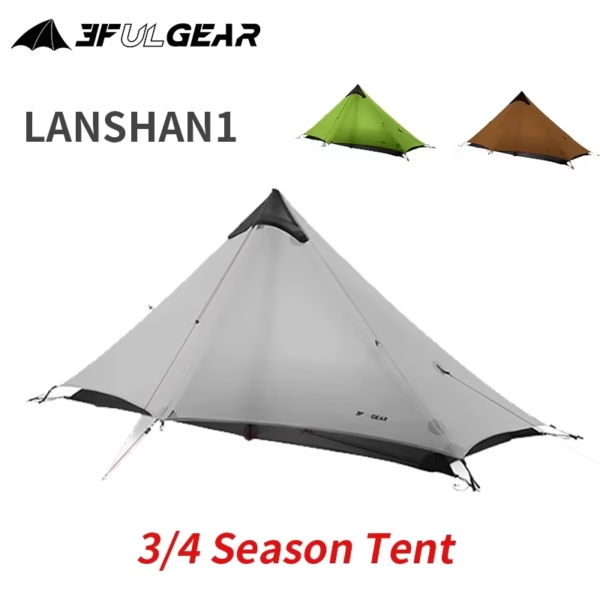
Ultralight 3 F UL GEAR Lan Shan 1 Tent for Solo Adventures Rated 5.00 out of 5
$359.23Original price was: $359.23.$250.38Current price is: $250.38. -
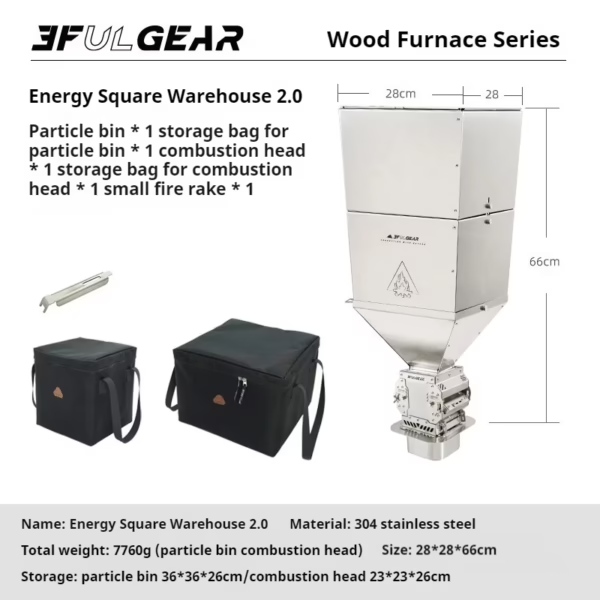
Ultimate 3 F UL GEAR 2.0 Stainless Steel Pellet Fuel Hopper Rated 5.00 out of 5
$555.43Original price was: $555.43.$387.12Current price is: $387.12.



Product Gallery
-
 Ultimate 2-3 Person Inflatable Kayak for Fishing Fun Rated 5.00 out of 5
$1,551.37Original price was: $1,551.37.$1,081.26Current price is: $1,081.26. -
VEVOR 550 lb Heavy-Duty Folding Wagon & Bench for Adventurers
$156.01 – $253.61Price range: $156.01 through $253.61
-
Adventure-Ready Ultra Bright LED Headlamp with 3 Modes
$4.67 – $25.14Price range: $4.67 through $25.14













 Camping Gear
 Camping Chair
 Camping Table
 Sleeping Bags
 Camping Bed
 Sleeping Gear
 Storage Bags
 BBQ Portable
 Camping Tents
 Gazebos
 Outdoor Cooler
 Cookware
 Power
Power Camping Light
 Flashlight
 Portable Solar
 Power Banks
 Fish Finders
 Fishing Bags
 Fishing Jerseys
 Fishing Reels
 Fishing Chairs
 Fishing Bait Boat
 Fishing Floats
 Hard Baits
 Hiking Vests
 Outdoor Bags
 Water Filters
 Paracord
 Walkie Talkie
 Paddleboards
 Boats
Boats Sea Scooter
 Accessories
 Electric Bike
 Electric Scooter
Recent Comments