

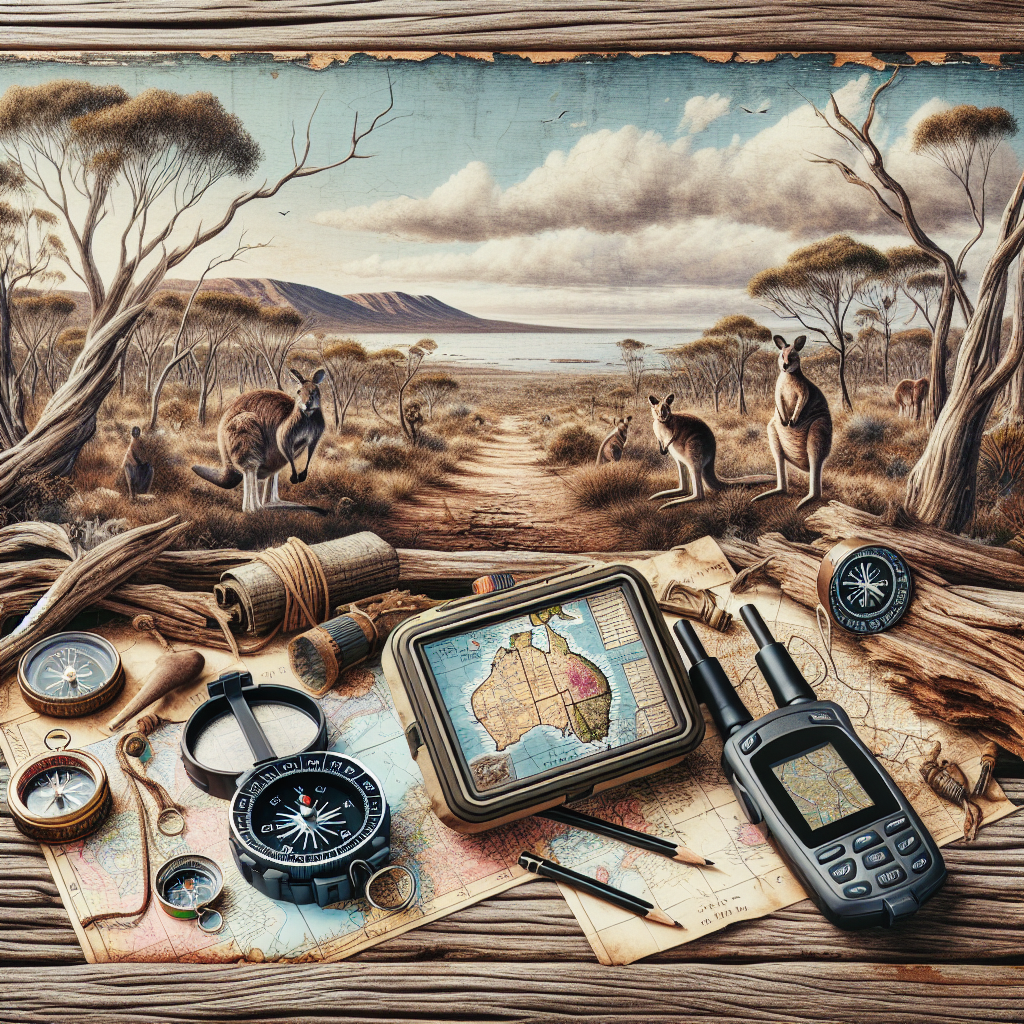

Why a GPS Device is Your Best Friend in the Wilderness
Embarking on a camping trip is all about reconnecting with nature, unplugging from the daily grind, and pushing your boundaries, right? But let’s be real: getting lost out there isn’t just a minor inconvenience; it can turn a dream adventure into a nightmare scenario faster than you can say “bear sighting.” You know what? That’s why a reliable GPS device isn’t just a gadget—it’s your lifeline.
Think about it: cell service can be as spotty as a leopard’s coat once you leave civilization behind. A map and compass are great, sure, but do you really know how to use them effectively under pressure? A GPS device fills that gap, offering precise positioning, pre-loaded maps, and the ability to mark waypoints, so you can confidently navigate even when the trail disappears or night falls.
We’re not just talking about convenience here. It’s about safety. It’s about having the tools to get yourself (and your companions) out of a sticky situation. And honestly, in the backcountry, peace of mind is priceless.
Understanding GPS Technology: A Quick and Dirty Guide
So, what exactly is GPS technology? Let me explain: GPS, or Global Positioning System, is a network of satellites orbiting Earth. These satellites transmit signals that your GPS device picks up, enabling it to pinpoint your location with remarkable accuracy. Think of it as a cosmic triangulation system designed just for you.
There are a few key things to keep in mind when we talk about GPS devices for camping:
- Accuracy: How close to your actual location the device’s reading is.
- Battery Life: Crucial for multi-day trips. You don’t want your GPS dying on day two, do you?
- Durability: Can it withstand the elements? Rain, drops, extreme temperatures—the backcountry can be brutal.
- Ease of Use: Intuitive interface? Readable screen? Fumbling with complicated menus in the dark isn’t fun.
- Mapping Capabilities: Pre-loaded maps, ability to download new ones, and compatibility with different map formats.
Consider these factors carefully. They’ll largely determine whether your GPS becomes a dependable tool or just another piece of useless gear in your pack.
Top GPS Devices for Camping: Our Handpicked Recommendations
Alright, let’s get down to brass tacks. These are some of the best GPS devices on the market right now, catering to different needs and budgets. I’ve included what makes them great, and what to watch out for given I am an expert in the area!
Garmin GPSMAP 66i: The All-Around Champ
The Garmin GPSMAP 66i is like the Swiss Army knife of GPS devices. It boasts a rugged design, a bright color display, and pre-loaded TopoActive maps. But the real kicker is its built-in inReach satellite technology.
- Pros: Global satellite communication, two-way messaging, SOS capabilities, detailed mapping.
- Cons: Pricey, subscription required for satellite features.
- Who it’s for: Serious backcountry adventurers who need reliable communication in emergencies.
Honestly, the ability to send messages and trigger an SOS from virtually anywhere on the planet is a game-changer. It gives you and your loved ones a significant peace of mind. Sure, it’s an investment, but can you really put a price on safety?
Garmin eTrex 32x: The Budget-Friendly Workhorse
Looking for something a bit more budget-friendly? The Garmin eTrex 32x is a fantastic option. It’s compact, lightweight, and surprisingly capable for the price. It might not have all the bells and whistles of the GPSMAP 66i, but it gets the job done.
- Pros: Affordable, long battery life, pre-loaded TopoActive maps, supports expandable memory.
- Cons: Smaller screen, lacks advanced features like satellite communication.
- Who it’s for: Casual campers and hikers who want a reliable GPS without breaking the bank.
Here’s the thing: this device is perfect. It’s simple, reliable, and won’t leave you weeping when you accidentally drop it on a rock. Expandable memory also enables you to add third party maps for more niche camping trips.
Gaia GPS App: The Smartphone Savior
Now, you might be thinking, “Do I really need a dedicated GPS device when I have a smartphone?” Well, not necessarily. Apps like Gaia GPS have transformed smartphones into surprisingly powerful navigation tools. Plus, it is far cheaper.
- Pros: Affordable subscription, access to a vast library of maps, user-friendly interface, can download maps for offline use.
- Cons: Drains battery, relies on your phone’s durability, requires a separate power bank.
- Who it’s for: Tech-savvy campers who don’t mind relying on their smartphone and don’t need satellite communication.
I would suggest a rugged case and a beefy power bank, since your phone’s battery will take a beating. But for many, Gaia GPS is a cost-effective and convenient alternative to a dedicated GPS device.
Features to Look for: What Really Matters?
Okay, so you’ve got a few GPS devices in mind. But how do you decide which one is right for you? Here are a few features to consider:
- Battery Life: Seriously, this is crucial. Look for devices with long battery life or the ability to use replaceable batteries.
- Screen Visibility: Can you see the screen in direct sunlight? Backlit displays are a must.
- Water Resistance: An IPX7 rating or higher is ideal.
- User Interface: Is it intuitive? Can you easily mark waypoints and navigate menus with gloves on?
- Map Compatibility: Does it support the map formats you need? Can you download custom maps?
Don’t just focus on the flashy features. Consider how you’ll actually use the device in the field. A simple, reliable GPS with good battery life might be a better choice than a feature-packed device that’s a pain to use.
Battery Life: The Underrated Hero of GPS Devices
Let’s talk about something super important: battery life. It’s easy to get caught up in fancy features, but a GPS is about as useful as a chocolate teapot if its battery dies halfway through your trip. I kid you not, you need solid battery life.
When evaluating a GPS device, pay close attention to the manufacturer’s battery life claims. And then, take them with a grain of salt. Real-world usage often differs from lab tests.
Here are some tips for maximizing battery life on the trail:
- Dim the Screen: The brighter the screen, the faster the battery drains.
- Turn Off Unnecessary Features: Bluetooth, Wi-Fi, and continuous tracking can all sap power.
- Carry a Power Bank: A must for smartphone GPS users.
- Use Replaceable Batteries: If your GPS supports them, bring extras.
- Keep It Warm: Cold temperatures can significantly reduce battery life.
Seriously, planning for battery life is not an edge case, this is just common sense.
Map and Compass Skills: Why They Still Matter
You might be thinking, “With a fancy GPS, who needs a map and compass?” Honestly, that’s a dangerous mindset. GPS devices can fail—batteries die, screens break, satellites go offline (sometimes). A map and compass are reliable backups that don’t rely on technology or batteries.
Here’s the thing: knowing how to read a map and use a compass is a fundamental outdoor survival skill. Not only will it give you a backup navigation method, but it’ll also deepen your understanding of the landscape.
Seriously. Take the time to learn basic map and compass skills. It could save your life.
Note: Many parks and recreation services, as well as outdoor organizations, offer courses on the basics of using a map and compass.
Pre-Trip Prep: Loading Maps and Waypoints
Okay, you’ve got your GPS, and you know how to use it. Now what? The real magic happens before you even leave home.
Here’s what you need to do:
- Download Maps: Make sure you have detailed topographic maps for the area you’ll be exploring.
- Mark Waypoints: Identify key landmarks, campsites, water sources, and potential hazards, and mark them as waypoints on your GPS.
- Create Routes: Plan your route in advance, and upload it to your GPS.
- Practice: Familiarize yourself with the device’s interface and features before you hit the trail.
Pro-Tip: Many GPS devices and apps allow you to share your planned routes and waypoints with others. This can be a lifesaver if you get separated from your group.
Staying Safe: Emergency Features and Communication
Let’s talk about when things go sideways. A GPS device can be a critical tool in an emergency situation.
Here’s what to look for:
- SOS Functionality: Some GPS devices (like the Garmin GPSMAP 66i) have a built-in SOS feature that allows you to send an emergency signal to a rescue center.
- Two-Way Messaging: The ability to send and receive messages via satellite can be invaluable for coordinating a rescue.
- Waypoint Averaging: Mark your starting location, or emergency location, to help facilitate a search and rescue.
- Emergency Contacts: Pre-enter emergency contact information into your GPS device.
Remember, a GPS is just one piece of the puzzle. Always carry a well-stocked first-aid kit, know basic first aid, and let someone know your itinerary before you head out.
External Source
Further, it is a good idea when in the backcountry to have ways to provide clean drinking water. Emergency Essentials has you covered, find them here.
Real-World Scenarios: How a GPS Saved the Day
These gadgets are life savers! Time for example.
Lost in the Fog: A hiker got disoriented in dense fog. Using his GPS, he was able to navigate back to the trailhead by following a pre-loaded route.
Injured on the Trail: A mountain biker broke his arm. His GPS allowed him to send an SOS signal and provide his exact location to rescuers.
Unexpected Detour: A group of backpackers encountered a washed-out bridge. Their GPS helped them find an alternate route around the obstacle.
These are just a few examples of how a GPS device can make a real difference in the backcountry. It’s not just about convenience; it’s about safety and preparedness.
Final Thoughts: Embrace Technology, Respect the Wilderness
So, there you have it: a comprehensive guide to choosing and using a GPS device for your next camping trip. Remember, technology is a tool—not a replacement for common sense and good judgment. Embrace it, learn how to use it effectively, and always respect the wilderness.
Here’s the thing: the beauty of the backcountry lies in its unpredictability. But with the right preparation and the right tools, you can confidently explore the wilderness and return home safe and sound.
FAQ: Your GPS Questions Answered
DISCLAIMER
Please note that while GPS devices are valuable tools for navigation and safety, they are not foolproof. Weather conditions, terrain, and other factors can affect their accuracy. It is essential to always exercise caution, be aware of your surroundings, and have backup navigation methods. The information provided in this article is for general guidance only and should not be considered a substitute for professional training or expertise. Always consult with experienced outdoor professionals before undertaking any backcountry adventure.
Categories
- Navigation & Safety (68)
- Shelter & Sleep (72)
Top rated products
-
 Effortless Power: 20 W Solar Charger for Blink Outdoor Cameras Rated 5.00 out of 5
$45.66Original price was: $45.66.$31.82Current price is: $31.82. -
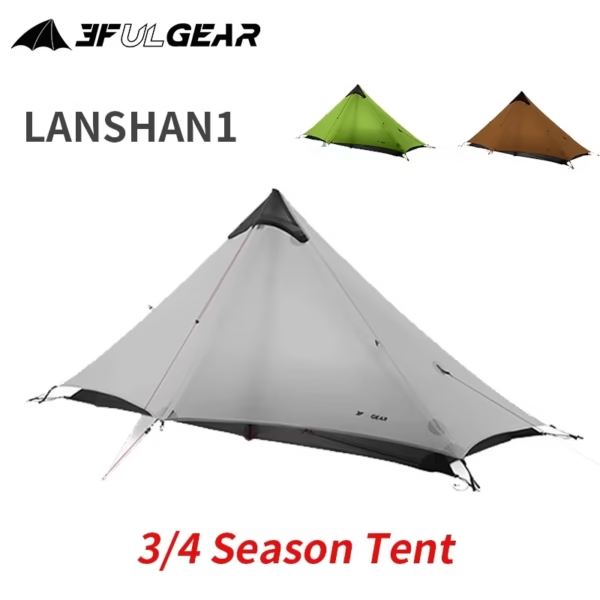
Ultralight 3 F UL GEAR Lan Shan 1 Tent for Solo Adventures Rated 5.00 out of 5
$359.23Original price was: $359.23.$250.38Current price is: $250.38. -
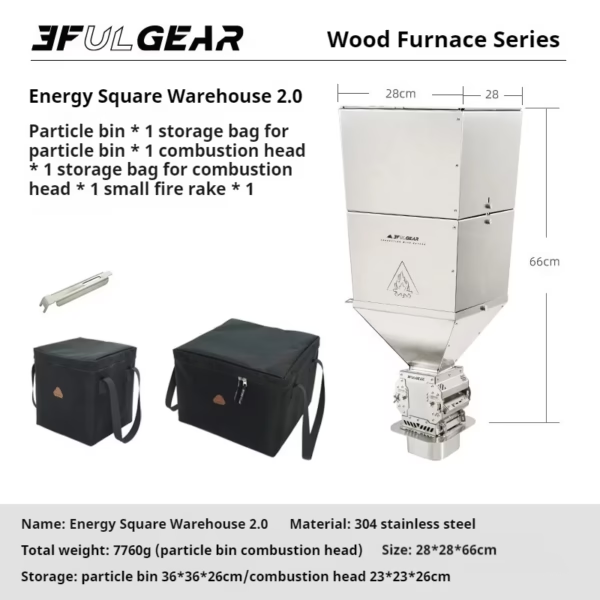
Ultimate 3 F UL GEAR 2.0 Stainless Steel Pellet Fuel Hopper Rated 5.00 out of 5
$555.43Original price was: $555.43.$387.12Current price is: $387.12.



Product Gallery
-
 Ultimate 2-3 Person Inflatable Kayak for Fishing Fun Rated 5.00 out of 5
$1,551.37Original price was: $1,551.37.$1,081.26Current price is: $1,081.26. -
VEVOR 550 lb Heavy-Duty Folding Wagon & Bench for Adventurers
$156.01 – $253.61Price range: $156.01 through $253.61
-
Adventure-Ready Ultra Bright LED Headlamp with 3 Modes
$4.67 – $25.14Price range: $4.67 through $25.14









 Camping Gear
 Camping Chair
 Camping Table
 Sleeping Bags
 Camping Bed
 Sleeping Gear
 Storage Bags
 BBQ Portable
 Camping Tents
 Gazebos
 Outdoor Cooler
 Cookware
 Power
Power Camping Light
 Flashlight
 Portable Solar
 Power Banks
 Fish Finders
 Fishing Bags
 Fishing Jerseys
 Fishing Reels
 Fishing Chairs
 Fishing Bait Boat
 Fishing Floats
 Hard Baits
 Hiking Vests
 Outdoor Bags
 Water Filters
 Paracord
 Walkie Talkie
 Paddleboards
 Boats
Boats Sea Scooter
 Accessories
 Electric Bike
 Electric Scooter
Recent Comments