



<p>So, you're itching to ditch the car and hit the trails, huh? Camping is awesome, a chance to reconnect with nature, roast marshmallows, and tell spooky stories around a crackling fire. But hold on a second. Before you pack your tent and head into the wilderness, let's talk about something super important: navigation. Getting lost isn't just inconvenient; it can turn a fun adventure into a survival situation real quick. Trust me, you don't want that.</p>
<h2>Why Navigation Skills are Non-Negotiable for Campers</h2>
<p>Okay, why is navigation even a big deal these days? We have phones, right? Well, phones die. Batteries drain. Cell service vanishes faster than a s'more around a hungry bear. Relying solely on technology is a recipe for disaster. Navigation skills are your Plan B, your safety net, your way to ensure you make it back to civilization with all your limbs intact. Think of it as investing in yourself, your own wilderness survival insurance policy.</p>
<h2>Understanding the Lay of the Land: Maps—Not Just for Pirates Anymore</h2>
<p>Let's start with the basics: maps. A good topographic map is your best friend in the backcountry. It shows you the shape of the land, the elevation changes, water sources, trails, and other key features. It's like a secret decoder ring for the wilderness. But just having a map isn't enough; you need to know how to read it. Seriously, don't be the person who stares blankly at contour lines. It's not as hard as it looks.</p>
<h3>What do all those lines even MEAN?</h3>
<p>Contour lines, my friend, are your key to understanding the terrain. They connect points of equal elevation. The closer the lines, the steeper the slope. Widely spaced lines mean a gentle incline. Concentric circles usually indicate a hilltop or a summit. Get familiar with these patterns, and you'll be able to visualize the landscape in 3D. It's like magic... nerdy map magic. A pro tip? Look for a map key (legend), typically found at the corner of the map. They tell you what all the symbols mean so you can better understand the terrain.
<h3>Choosing the Right Map: Size Matters</h3>
<p>Think about where you're going and what kind of detail you need. For a short day hike on well-maintained trails, a simple trail map might suffice. But for a multi-day backpacking trip in remote areas, you'll want a detailed topographic map with a larger scale. Consider waterproof or water-resistant maps – because Mother Nature has a way of throwing curveballs like surprise rainstorms. Also if you're hiking through BLM land make sure that they are marked so you can camp there!</p>
<h2>Finding Your Way: The Compass—More Than Just a Decoration</h2>
<p>The compass: that little tool that points north. Sounds simple, right? But mastering the compass is crucial for accurate navigation, especially when visibility is poor. Forget about sunshine and clear skies; what happens when fog rolls in or you're hiking through dense forest? That's when your compass becomes your lifeline. It helps you maintain direction, even when you can't see the trail.</p>
<h3>Parts of a Compass: Know Your Tool</h3>
<p>A compass isn't just a needle spinning around. Get familiar with the different parts: the baseplate, the rotating bezel, the magnetic needle, the direction-of-travel arrow, and the declination adjustment. Knowing what each part does will make using the compass much easier. It’s like knowing the parts of your car before you try to drive it, honestly.</p>
<h3>Understanding Declination: Why North Isn't Always True North</h3>
This is where things get a little tricky, but stick with me. Declination is the difference between magnetic north (where your compass needle points) and true north (the geographic North Pole). This difference varies depending on your location. You need to adjust your compass for declination to get accurate bearings. Most topographic maps will show the declination for the area. Learn how to adjust your compass – it’s usually a simple screw or dial. Seriously, don’t skip this step; it could throw you off course significantly.
<h3>Taking a Bearing: Your Path in Degrees</h3>
<p>A bearing is the direction you want to travel, expressed in degrees. To take a bearing, hold your compass flat, point the direction-of-travel arrow towards your destination, and rotate the bezel until the north end of the magnetic needle aligns with the orienting arrow. Then, read the bearing at the index line. That's the direction you need to follow. Practice this skill until it becomes second nature. You should be able to do this in your sleep! Well, metaphorically speaking.</p>
<h2>Putting It All Together: Map and Compass Skills</h2>
<p>Now for the magic trick: combining your map and compass skills. This is where you go from being a casual camper to a confident navigator. It's like learning to ride a bike; once you get it, you'll never forget.</p>
<h3>Orienting Your Map: Matching the Map to Reality</h3>
Orienting your map means aligning it with the terrain around you. Use your compass to find north, and then rotate the map until north on the map points in the same direction as north on your compass. This allows you to easily identify landmarks and features on the ground. Pro tip: Line up a prominent feature on the map with the same feature in real life i.e. a mountain range. This way the map will already be close to properly orienting.
<h3>Finding Your Location: Triangulation to the Rescue</h3>
<p>Okay, you're lost. Don't panic. Use triangulation to determine your location. Identify two or three prominent landmarks on the map and in the real world. Take a bearing to each landmark, and then transfer those bearings to the map. The point where the lines intersect is your approximate location. There are several types of landmarks to use, such as mountain peaks and the intersection of trails.</p>
<h3>Planning Your Route: No More Wandering Aimlessly</h3>
<p>Before you even lace up your boots, sit down with your map and compass and plan your route. Identify key landmarks, note the distances between them, and calculate the bearings you need to follow. Share your route plan with someone back home and let them know when you expect to return. This is crucial for safety. If something goes wrong, they'll know where to start looking for you. The last thing you want to do is have search and rescue looking in the wrong place! </p>
GPS Devices: High-Tech Help – But Don’t Rely Too Much
<p>GPS devices can be awesome tools. A handheld GPS unit can tell you your exact location, track your progress, and store waypoints. Many have built-in maps and compasses. However, remember the phone battery problem? GPS devices also rely on power, and they can fail. Think of them as a supplement to your map and compass skills, not a replacement.</p>
<h3>Basic GPS Functions: Waypoints, Tracks, and Routes</h3>
<p>Learn how to use the basic functions of your GPS device. Waypoints are specific locations you can mark and return to. Tracks record your path as you travel. Routes are pre-planned paths you can follow. Practice using these functions before you hit the trail. You don't want to be fiddling with your GPS when you're already stressed and trying to find your way back to camp.</p>
<h3>Entering Coordinates: Pinpointing Your Destination</h3>
<p>Sometimes, you'll need to enter coordinates manually. This could be to navigate to a specific campsite or to find a hidden geocache. Make sure you understand the different coordinate systems (latitude/longitude, UTM, etc.) and how to enter them correctly into your GPS. A simple mistake can throw you off by miles.</p>
<h3>Battery Management: Keeping Devices Alive</h3>
<p>Always carry extra batteries for your GPS device. Consider a solar charger or a power bank. Turn off the GPS when you don't need it to conserve power. Store the device in a warm place to prevent the battery from draining quickly in cold weather. A dead GPS is about as useful as a paperweight in the backcountry.</p>
<h2>Trail Markers and Signage: Follow the Clues</h2>
<p>Many trails are marked with blazes, cairns, or signs. Pay attention to these markers. They're there to guide you and keep you on the right path. But don't blindly follow them without using your other navigation skills. Markers can be missing, damaged, or misleading. Think of them as helpful hints, not foolproof guarantees.</p>
<h3>Types of Trail Markers: Blazes, Cairns, and Signs</h3>
Blazes are painted marks on trees or rocks. Cairns are stacks of stones. Signs are… well, signs! Each type of marker has its own purpose. Learn to recognize them and understand what they mean. Some markers indicate direction, others indicate distance, and still others indicate potential hazards.
<h3>What to Do When You Lose the Trail</h3>
<p>It happens to the best of us. You're hiking along, enjoying the scenery, and then…poof! The trail disappears. What do you do? First, don't panic. Retrace your steps to the last known marker. Use your map and compass to get a sense of the surrounding terrain. If you can't find the trail, use your best judgment to navigate in the direction you were heading. It’s like when you’re driving and miss your exit; sometimes you have to backtrack to get back on the right path.</p>
<h3>Reporting Missing or Damaged Markers</h3>
<p>If you notice missing or damaged trail markers, report them to the local park authorities or trail maintenance organization. You could be saving someone else from getting lost. It's like being a good neighbor; you're helping to keep the trails safe for everyone.</p>
<h2>Emergency Navigation Techniques: When Things Go South</h2>
<p>Alright, let's talk about the worst-case scenario: you're seriously lost, injured, or stranded. What do you do? This is where your emergency navigation skills come into play. Preparation is key, and remember, a calm head can save your life.</p>
<h3>Staying Calm and Assessing the Situation</h3>
Panic is your enemy. Take a deep breath and assess the situation. Are you injured? Do you have food and water? What’s the weather like? How much daylight do you have left? Staying calm will help you make rational decisions. Kinda like in a scary movie, the first scream is the signal for everything to fall apart.
<h3>Building a Shelter and Making a Fire</h3>
<p>If you're going to be spending the night in the wilderness, you need shelter and warmth. Build a makeshift shelter out of branches, leaves, or snow. Make a fire for heat, light, and to signal for help. Knowing basic survival skills can make all the difference. Remember, your priority is to survive and signal for rescue.</p>
<h3>Using a Signal Mirror or Whistle</h3>
<p>These small, lightweight items can be lifesavers. A signal mirror can reflect sunlight for miles, attracting the attention of aircraft. A whistle can be heard over long distances, alerting rescuers to your location. Carry these items with you at all times and know how to use them. Three blasts on a whistle is an internationally recognized distress signal.</p>
<h2>Practice Makes Perfect: Hone Your Skills Before You Go</h2>
<p>Navigation is like any other skill. Use it or lose it. Practice your map and compass skills regularly, even when you're not camping. Take orienteering courses, join hiking clubs, and participate in wilderness survival workshops. The more you practice, the more confident you'll be in your ability to navigate in any situation. Think of your backyard as a training ground, prepping you for the big leagues of wilderness adventures.</p>
<h3>Orienteering: The Sport of Navigation</h3>
<p>Orienteering is a competitive sport that involves navigating through unfamiliar terrain using a map and compass to find a series of checkpoints. It's a great way to improve your navigation skills and have fun at the same time. Look for orienteering clubs in your area and give it a try. It's like a real-life video game, except you get fresh air and exercise!</p>
<h3>Practice in Different Conditions: Day, Night, Rain, Snow</h3>
<p>Don't just practice when the weather is perfect. Practice navigating in different conditions: during the day and at night, in rain and snow. Navigating in challenging conditions will test your skills and prepare you for the unexpected. Because let’s face it, the backcountry doesn’t always play nice.</p>
<h3>Familiarize Yourself with the Terrain: Local Hikes, Trails, Parks</h3>
<p>Explore the trails and parks in your local area. Get familiar with the terrain and the landmarks. Practice using your map and compass to navigate these areas. The more familiar you are with the landscape, the easier it will be to navigate in unfamiliar areas. It’s kinda like learning to drive in your neighborhood before hitting the highway.</p>
<h2>Camp Security: Staying Safe at the Campsite</h2>
Navigation isn’t just about getting from point A to point B. It’s also about staying safe at the campsite. Choose a safe campsite, be aware of your surroundings, and take precautions to protect yourself and your belongings. Camp security is often overlooked, but it’s an important part of backcountry navigation. Think of it as setting up a home base in the wilderness—you want it to be safe and secure.
<h3>Choosing a Safe Campsite: Considerations</h3>
<p>When choosing a campsite, consider factors such as proximity to water, exposure to the elements, and potential hazards. Avoid camping in low-lying areas that could flood, near dead trees that could fall, or in areas with evidence of wildlife activity. Choose a campsite that is relatively flat and sheltered from the wind. It's like picking the right neighborhood; you want it to be safe and quiet.</p>
<h3>Setting Up a Perimeter: Protection and Awareness</h3>
Create a perimeter around your campsite to deter wildlife and alert you to intruders. Hang your food in a bear bag, store your gear properly, and set up a tripwire alarm. Be aware of your surroundings and listen for any unusual sounds. A little paranoia can go a long way in the backcountry.
<h3>Being Aware of Wildlife: What to Do</h3>
<p>Learn about the wildlife in the area and take precautions to avoid encounters. Store your food properly, make noise while hiking, and carry bear pepper spray. If you encounter wildlife, stay calm and avoid making sudden movements. Back away slowly and give the animal plenty of space. Remember, you're a visitor in their home. They may be curious about you but they don’t know you’re harmless.</p>
<h2>Final Thoughts: Embrace the Adventure, Respect the Wilderness</h2>
<p>Backcountry navigation is a skill that can enhance your camping experience and keep you safe in the wilderness. By mastering map and compass skills, learning to use GPS devices, following trail markers, and practicing emergency navigation techniques, you can explore the backcountry with confidence and peace of mind. So, grab your gear, hit the trails, and embrace the adventure – but always respect the wilderness. You know what? Maybe I’ll see you out there sometime.</p>
<h2>FAQ: Your Burning Questions Answered</h2>
<div>

    <button class="accordion"><b>What's the most important thing to remember when using a compass?</b></button>

    <div class="panel">

        <p>Always adjust for declination! Forgetting this can throw you off course. Seriously, double-check it every time you're in a new area.</p>

    </div>
<button class="accordion"><b>Can I rely solely on my phone for navigation?</b></button>

    <div class="panel">

        <p>Nope, big no-no. Phone batteries die, and cell service is unreliable in the backcountry. Use it as a backup, but always have map and compass skills.</p>

    </div>
<button class="accordion"><b>What should I do if I get lost?</b></button>

    <div class="panel">

        <p>Stay calm. Assess the situation, retrace your steps, and use your map and compass to try and locate yourself.</p>

    </div>
<button class="accordion"><b>How can I practice my navigation skills?</b></button>

    <div class="panel">

        <p>Take orienteering courses, join hiking clubs, and familiarize yourself with the trails in your local area. Even practicing in your backyard can help!</p>

    </div>
<button class="accordion"><b>Is GPS navigation foolproof?</b></button>

    <div class="panel">

        <p>Not at all. GPS devices can fail or lose signal. They're a great tool, but don't rely on them entirely. Know how to use a map and compass as a backup.</p>

    </div>
<button class="accordion"><b>What are the basic components of a compass?</b></button>

    <div class="panel">

        <p>The components are the rotating bezel, the magnetic needle, the direction-of-travel arrow, and the declination adjustment.</p>

    </div>
<button class="accordion"><b>Is setting up camp security really that important?</b></button>

    <div class="panel">

        <p>Absolutely. It keeps you, your gear, and the wildlife around you safe. Properly storing food and being aware of your surroundings goes a long way.</p>

    </div>

</div>

<!-- External Links -->
REI Expert Advice on Navigation
National Park Service – The 10 Essentials
DISCLAIMER
While this article provides general guidance on navigation and camping safety, it’s essential to understand that backcountry conditions can be unpredictable. Always conduct thorough research specific to your destination, be aware of current weather conditions, and consult with local experts for the most up-to-date information. The author and publisher are not responsible for any incidents, injuries, or damages that may occur during your camping adventures. Always prioritize safety and make informed decisions based on your own judgment and experience.
<script>

    // JavaScript for the accordion functionality

    var acc = document.getElementsByClassName("accordion");

    var i;
for (i = 0; i < acc.length; i++) {

        acc[i].addEventListener("click", function() {

            this.classList.toggle("active");

            var panel = this.nextElementSibling;

            if (panel.style.display === "block") {

                panel.style.display = "none";

            } else {

                panel.style.display = "block";

            }

        });

    }

</script>Categories
- Navigation & Safety (68)
- Shelter & Sleep (72)
Top rated products
-
 Effortless Power: 20 W Solar Charger for Blink Outdoor Cameras Rated 5.00 out of 5
$45.66Original price was: $45.66.$31.82Current price is: $31.82. -
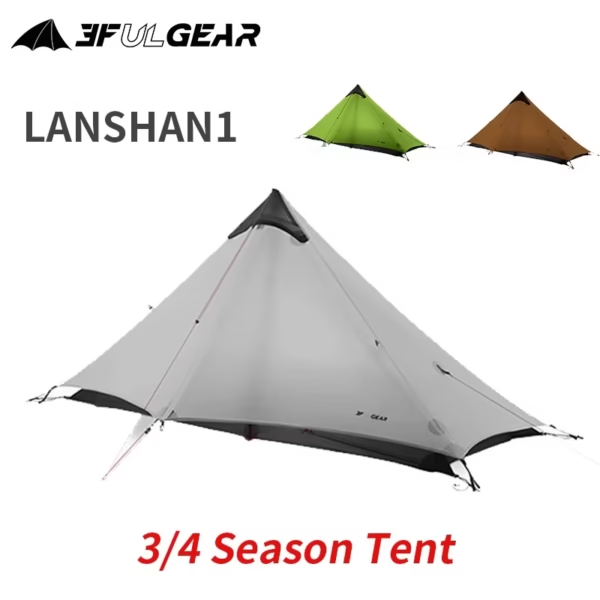
Ultralight 3 F UL GEAR Lan Shan 1 Tent for Solo Adventures Rated 5.00 out of 5
$359.23Original price was: $359.23.$250.38Current price is: $250.38. -
Ultimate 3 F UL GEAR 2.0 Stainless Steel Pellet Fuel Hopper Rated 5.00 out of 5
$555.43Original price was: $555.43.$387.12Current price is: $387.12.




Product Gallery
-
 Ultimate 2-3 Person Inflatable Kayak for Fishing Fun Rated 5.00 out of 5
$1,551.37Original price was: $1,551.37.$1,081.26Current price is: $1,081.26. -
VEVOR 550 lb Heavy-Duty Folding Wagon & Bench for Adventurers
$156.01 – $253.61Price range: $156.01 through $253.61
-
Adventure-Ready Ultra Bright LED Headlamp with 3 Modes
$4.67 – $25.14Price range: $4.67 through $25.14








 Camping Gear
 Camping Chair
 Camping Table
 Sleeping Bags
 Camping Bed
 Sleeping Gear
 Storage Bags
 BBQ Portable
 Camping Tents
 Gazebos
 Outdoor Cooler
 Cookware
 Power
Power Camping Light
 Flashlight
 Portable Solar
 Power Banks
 Fish Finders
 Fishing Bags
 Fishing Jerseys
 Fishing Reels
 Fishing Chairs
 Fishing Bait Boat
 Fishing Floats
 Hard Baits
 Hiking Vests
 Outdoor Bags
 Water Filters
 Paracord
 Walkie Talkie
 Paddleboards
 Boats
Boats Sea Scooter
 Accessories
 Electric Bike
 Electric Scooter
Recent Comments