

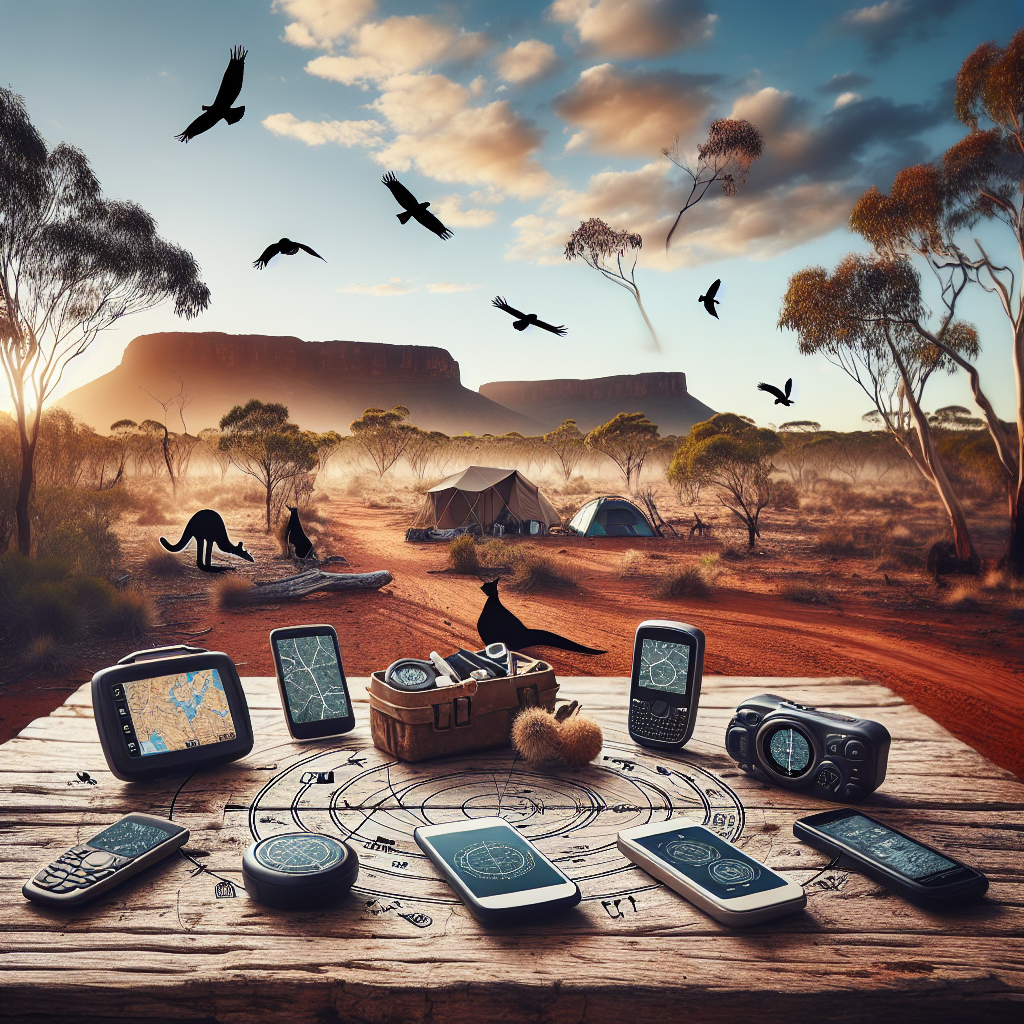
Peace of Mind in the Wild: GPS Devices That Ensure a Safe Camping Trip

Venturing into the great outdoors for a camping trip is an amazing experience—the crisp air, the stunning views, the escape from the everyday hustle. But let’s be real, it also comes with inherent risks. Getting lost, encountering unexpected weather, or simply needing assistance can quickly turn a dream trip into a nightmare. That’s where a good GPS device comes in. Think of it as your digital breadcrumb trail, your safety net, and your knowledgeable guide all rolled into one.
This article isn’t just about listing GPS devices. It’s about equipping you with the knowledge to choose the right one for your needs, understand its capabilities, and use it effectively to ensure a safe and enjoyable camping adventure. We will walk you through everything you need to know.
Why a GPS Device is an Essential Camping Companion
Why lug around another gadget when you’ve already got a smartphone? Good question! While smartphones have GPS capabilities, they’re often unreliable in the backcountry. Limited battery life, lack of signal, and vulnerability to damage make them a risky primary navigation tool. Dedicated GPS devices, on the other hand, are built for the challenges of the wilderness.
Beyond Getting from Point A to Point B
A GPS device is more than just a digital map. Here’s why it’s considered essential:
- Reliable Navigation: Unlike smartphones, GPS devices are designed for areas with limited or no cell service. They use satellite signals to pinpoint your location accurately.
- Durability: Camping can throw a lot at you. GPS devices are built to withstand the elements – rain, snow, drops, and extreme temperatures.
- Extended Battery Life: Many GPS devices boast battery lives that can last for days, crucial when you’re far from a power source. Imagine your phone dying halfway through a multi-day hike – not ideal, right?
- SOS Functionality: Some GPS devices come equipped with SOS features that allow you to send emergency messages and your location to rescue services. This could be a lifesaver in a serious situation. We will be discussing this more later.
- Preloaded Maps and Waypoints: Many models come with detailed topographic maps, trails, and points of interest preloaded, saving you the hassle of downloading maps beforehand.
Ultimately, a GPS device is an investment in your safety and peace of mind. It allows you to explore with confidence, knowing you have a reliable tool to guide you and help you in case of an emergency.
Understanding the Core Features of a Camping GPS Device
So, what exactly should you look for in a camping GPS device? Not all devices are created equal. Here’s a breakdown of the key features you should consider:
Accuracy: How Close Are You, Really?
This is arguably the most important factor. Accuracy depends on several factors, including the number of satellites the device can connect to and the quality of its antenna. Look for devices that support multiple satellite systems (like GPS, GLONASS, and Galileo) for improved accuracy, especially in challenging terrains like dense forests or deep canyons.
Generally, a good GPS device should provide accuracy within a few meters. Think about it—a few meters could be the difference between being on the trail and being in a ravine. You want something that’s going to give you a reliable reading.
Mapping Capabilities: Seeing the Lay of the Land
A GPS device is as good as its maps. Consider these aspects:
- Preloaded Maps: Does the device come with preloaded topographic maps of your target area? This can save you time and effort.
- Map Detail: How detailed are the maps? Do they show trails, elevation contours, water sources, and landmarks? High-resolution maps are essential for accurate navigation.
- Customization: Can you add custom waypoints, routes, and geocaches? The ability to customize your maps allows you to tailor the device to your specific needs.
- Map Updates: How often are the maps updated? Outdated maps can be misleading, especially in areas with changing landscapes.
Pro tip: Don’t just assume the maps are accurate! Always cross-reference with paper maps whenever possible. GPS devices can fail, and it’s good to have a backup. Plus, comparing the digital and physical maps can help you get a better sense of the terrain you’ll be traversing.
Battery Life: Powering Your Adventure
Nothing is worse than a GPS device that dies on you mid-hike. Look for devices with long battery lives, especially if you’re planning a multi-day trip. Consider these factors:
- Battery Type: Some devices use rechargeable batteries, while others use disposable batteries. Rechargeable batteries are more environmentally friendly and cost-effective in the long run, but disposable batteries can be useful in situations where you don’t have access to a power source.
- Battery Life in GPS Mode: This is the key specification. Look for devices that offer at least 15-20 hours of battery life in GPS mode.
- Power Saving Modes: Does the device have power saving modes that can extend battery life? These modes often dim the screen or reduce the frequency of GPS updates.
Here’s a practical tip: Always carry a backup power source, such as a power bank or extra batteries. You can never be too prepared when it comes to power in the backcountry.
Durability and Water Resistance: Built to Last
Your GPS device will be exposed to the elements, so it needs to be tough. Look for devices that are waterproof, shockproof, and dustproof. Check the IP (Ingress Protection) rating to understand the device’s level of water and dust resistance.
Key considerations include:
- IP Rating: A higher IP rating indicates better protection. For example, an IP67 rating means the device is dust-tight and can withstand immersion in water up to 1 meter for 30 minutes.
- Construction Materials: Look for devices made from durable materials, such as rugged plastic or rubber.
- Screen Protection: A scratch-resistant screen is essential for maintaining visibility.
Honestly, don’t underestimate the importance of durability. I once had a GPS device fail because I assumed it was more water-resistant than it actually was. Lesson learned: read the specs carefully!
User Interface and Ease of Use: Keeping it Simple
A complex GPS device is useless if you can’t figure out how to use it. Look for a device with an intuitive interface, clear display, and easy-to-use buttons or touchscreen. Consider these aspects:
- Screen Size and Resolution: A larger screen with high resolution makes it easier to view maps and data.
- Button Layout: Are the buttons easy to access and use, even with gloves on?
- Menu Navigation: Is the menu system logical and easy to navigate?
- Customization: Can you customize the display to show the data you need?
Do yourself a favor and play around with the device before you hit the trail. Practice creating waypoints, navigating routes, and using the different features. Trust me, you don’t want to be fumbling with a complicated menu system when you’re already stressed out in the wilderness.
SOS and Communication Features: Calling for Help
In an emergency, the ability to communicate with the outside world can be a lifesaver. Some GPS devices offer SOS features that allow you to send emergency messages and your location to rescue services via satellite. This can be a game-changer in remote areas where cell service is unavailable.
Key features to look for include:
- SOS Button: A dedicated SOS button that can be easily activated in an emergency.
- Two-Way Messaging: The ability to send and receive messages, allowing you to communicate with rescue services or loved ones.
- Subscription Requirements: Be aware that SOS services often require a subscription. Make sure you understand the terms and costs before you rely on these features.
Side note: Don’t rely solely on SOS features. Always let someone know your itinerary and expected return time. Carry a whistle and a mirror for signaling. And consider taking a wilderness first aid course. Being prepared is always the best strategy.
Top GPS Devices for Camping: A Curated List
Alright, now that we’ve covered the key features, let’s take a look at some of the top GPS devices for camping. These are devices that consistently receive high marks for accuracy, durability, and user-friendliness.
Disclaimer: I am just an AI and have not personally tested all these devices. The following recommendations are based on expert reviews and user feedback.
- Garmin GPSMAP 66i: Known for its ruggedness and comprehensive features, including inReach satellite communication, preloaded TopoActive maps, and a high-resolution color display.
- Garmin inReach Mini 2: A compact and lightweight option that offers two-way messaging, SOS capabilities, and basic navigation features. Perfect for minimalist hikers and backpackers.
- Garmin eTrex 32x: A basic, but reliable option for those who don’t need all the bells and whistles. It’s durable, has a long battery life and comes at a lower price point.
- Gaia GPS (App): Best used with an iPad that can provide more screen real estate.
- Bad Elf Flex GPS Receiver: Best used with an iPad that can provide more screen real estate.
- SPOT Gen4: Primarily a satellite messenger with SOS capabilities, but it also offers basic tracking features. A good option for those who prioritize communication and emergency assistance.
Before you make a purchase, take some time to read reviews, compare specs, and consider your specific needs. What works for one person might not work for another.
Maximizing Your GPS Device: Tips and Best Practices
Buying a GPS device is just the first step. To truly maximize its potential and ensure your safety, you need to use it correctly and practice good navigation skills. Here are some tips and best practices to keep in mind:
Practice Before You Go: No, Seriously, Practice!
Don’t wait until you’re in the middle of nowhere to figure out how your GPS device works. Spend some time practicing with it in a familiar environment, like your backyard or a local park. Learn how to:
- Create waypoints
- Navigate routes
- Use the map features
- Send an SOS message (if applicable)
- Troubleshoot common problems
Think of it like learning to drive. You wouldn’t jump behind the wheel for the first time on a busy highway, would you? The same principle applies to using a GPS device in the wilderness.
Calibrate Your Compass: Getting Your Bearings Right
Most GPS devices have a built-in compass. Calibrate it regularly to ensure accurate readings. Follow the manufacturer’s instructions for calibration.
Why is this important? A properly calibrated compass can help you orient yourself on the map and determine your direction of travel. This is especially useful in areas with limited visibility or challenging terrain.
Mark Waypoints and Plan Routes: Leaving a Digital Breadcrumb Trail
Before you head out on your camping trip, take the time to mark waypoints for important locations, such as your campsite, water sources, trail junctions, and potential hazards. Plan your route in advance and upload it to your GPS device.
Why is this helpful? Waypoints and planned routes make it easier to navigate and stay on track. They also provide a digital record of your travels, which can be useful in case of an emergency.
Conserve Battery Life: Every Milliampere Counts
Battery life is precious in the backcountry. Here are some tips for conserving power:
- Turn off unnecessary features, such as Bluetooth and Wi-Fi.
- Reduce screen brightness.
- Use power saving modes.
- Carry a backup power source.
- Turn off the device when you’re not actively using it.
Honestly, it’s better to be paranoid about battery life than to run out of power when you need it most. I usually carry two power banks and extra batteries, just to be safe.
Layered Navigation: Never Put All Your Eggs in One Basket
A GPS device should be part of a layered navigation system that includes a map, compass, and knowledge of basic orienteering skills. Don’t rely solely on your GPS device. Technology can fail, and you need to be prepared to navigate using traditional methods.
This means:
- Carrying a topographic map of the area you’ll be exploring.
- Knowing how to use a compass to determine direction and take bearings.
- Understanding how to read elevation contours.
- Being able to identify landmarks and natural features.
Think of it as a backup plan. If your GPS device fails, you can still navigate safely using your map and compass skills.
Regularly Check Your Position: Are We There Yet?
Don’t just blindly follow the GPS device. Regularly check your position on the map to make sure you’re on track. Pay attention to your surroundings and compare them to what you see on the map.
Why is this important? GPS devices can be inaccurate at times, especially in areas with poor satellite coverage. By regularly checking your position, you can catch errors early and avoid getting lost.
Adapt to Changing Conditions: Flexibility is Key
Be prepared to adapt your plans based on changing conditions. Weather, terrain, and unforeseen circumstances can all impact your route. Use your GPS device to find alternative routes or bail-out points if necessary.
Remember, safety should always be your top priority. Don’t be afraid to turn back if conditions become too challenging. After all, the mountains will always be there.
Understanding the Limitations: When GPS Isn’t Enough
While GPS devices are incredibly useful, it’s important to understand their limitations. They’re not foolproof, and they shouldn’t be relied on as your only source of navigation.
Signal Obstruction: When Satellites Can’t See You
GPS signals can be blocked or weakened by dense forests, steep canyons, and buildings. In these situations, your GPS device may not be able to provide an accurate position.
That’s why it’s essential to have a backup navigation method, such as a map and compass. Even with the best GPS device, you can’t defy the laws of physics.
Battery Dependence: The Achilles’ Heel of Technology
GPS devices rely on batteries, and batteries can fail. Cold temperatures, heavy use, and age can all reduce battery life. If your battery dies, your GPS device becomes useless.
That’s why it’s crucial to conserve battery power and carry a backup power source. It’s also a good idea to practice navigating without a GPS device, just in case.
Map Accuracy: Trust, But Verify
The accuracy of the maps on your GPS device depends on the quality of the data and how recently they were updated. Maps can be outdated or contain errors, especially in areas with changing landscapes.
That’s why it’s important to cross-reference your GPS data with other sources, such as paper maps and local knowledge. Don’t blindly trust your GPS device. Verify its information and use your own judgment.
User Error: The Human Factor
Even the best GPS device is useless if you don’t know how to use it properly. User error is a common cause of navigation mistakes. Be sure to practice with your GPS device and understand its limitations.
And remember, a GPS device is just a tool. It’s up to you to use it wisely and make smart decisions based on the information it provides.
Camp Security: Using GPS to Safeguard Your Campsite
GPS devices aren’t just for navigation; they can also be used to enhance camp security. Here’s how:
Marking Your Campsite: Finding Your Way Back
When you arrive at your campsite, mark it as a waypoint on your GPS device. This will make it easier to find your way back if you venture out to explore or gather firewood.
It’s especially important to mark your campsite if you’re camping in a dense forest or an area with limited visibility. It’s surprisingly easy to get disoriented, even in familiar surroundings.
Establishing a Perimeter: Defining Your Territory
Use your GPS device to establish a virtual perimeter around your campsite. This can help you detect if someone or something enters your camp while you’re away or asleep.
How does this work? You can set up an alert on your GPS device that triggers when you cross the perimeter. This can give you early warning of potential threats.
Tracking Wildlife: Keeping a Safe Distance
Use your GPS device to track the movements of wildlife in the area. This can help you avoid encounters with dangerous animals.
How does this work? Some GPS devices have features that allow you to download wildlife tracking data. You can also use your GPS device to mark locations where you’ve seen animals and create a mental map of their movement patterns.
Sharing Your Location: Letting Others Know Where You Are
Use the sharing features on your GPS device or satellite messenger to share your location with friends or family. This can provide reassurance and help them track your progress.
In case of an emergency, sharing your location can expedite rescue efforts. First responders will know exactly where to find you.
Beyond GPS: Complementary Tools for Enhanced Safety
While a GPS device is a valuable tool, it’s important to supplement it with other safety equipment and skills. Here are some complementary tools that can enhance your safety in the backcountry:
Map and Compass: The Classics Never Fade
A map and compass are essential backup navigation tools. Learn how to use them properly and practice your orienteering skills. Even if you have a GPS device, it’s always a good idea to carry a map and compass, just in case.
Honestly, learning how to use a map and compass is a fundamental skill for any outdoor adventurer. It’s like learning how to swim. You may not need it every day, but it could save your life someday.
Personal Locator Beacon (PLB): A Direct Line to Rescue
A PLB is a small, handheld device that can be used to send an emergency signal to rescue services via satellite. Unlike a GPS device, a PLB is designed solely for emergencies. It doesn’t require a subscription and has a long battery life.
If you’re venturing into remote areas, a PLB can provide an extra layer of safety. It’s like having a direct line to rescue services, no matter where you are.
Here’s a link to a PLB selling website: ACR Artex
Satellite Messenger: Staying Connected
A satellite messenger allows you to send and receive messages via satellite, even in areas with no cell service. Some satellite messengers also have SOS capabilities and tracking features.
A satellite messenger can be a valuable tool for staying connected with loved ones, coordinating logistics, and getting help in an emergency. It’s like having a smartphone that works anywhere in the world.
First Aid Kit: Treating Minor Injuries
Carry a well-stocked first aid kit and know how to use it. Minor injuries can quickly become serious in the backcountry. A first aid kit can help you treat cuts, burns, sprains, and other common ailments.
It’s also a good idea to take a wilderness first aid course. This will give you the skills and knowledge to handle more serious medical emergencies.
Emergency Shelter: Protection from the Elements
Carry an emergency shelter, such as a tarp, bivy sack, or emergency blanket. This can provide protection from the elements in case you get caught in bad weather or have to spend an unexpected night in the backcountry.
Even a simple emergency shelter can make a big difference in your comfort and safety.
Final Thoughts: Embrace Technology, Respect the Wild
A GPS device can be an invaluable tool for enhancing your safety and enjoyment in the backcountry. But it’s important to remember that it’s just one tool in a larger toolkit. Use it wisely, supplement it with other safety equipment and skills, and always respect the power of nature.
The wilderness can be an unforgiving place. But with proper preparation and a healthy dose of caution, you can have a safe and rewarding camping experience. So, embrace the technology, learn the skills, and get out there and explore!
Frequently Asked Questions (FAQ)
While smartphones have GPS, their battery life, durability, and reliance on cell service make them unreliable for serious camping. Dedicated GPS devices are more robust and designed for backcountry use.
IP (Ingress Protection) ratings indicate a device’s resistance to dust and water. For example, IP67 means it’s dust-tight and can withstand immersion in water up to 1 meter for 30 minutes.
Update your maps regularly, especially before significant trips. Outdated maps can be misleading, particularly in areas with changing landscapes.
A GPS device is for navigation, marking waypoints, and tracking routes. A PLB (Personal Locator Beacon) is solely for sending emergency signals to rescue services via satellite without needing a subscription.
Yes, you can use GPS to mark your campsite, establish a perimeter, and share your location with others for enhanced security.
Limitations include signal obstruction in dense areas, battery dependence, map inaccuracies, and potential for user error. Always have backup navigation tools.
Yes, SOS features often require a subscription. Ensure you understand the terms and costs before relying on these services.
DISCLAIMER
Please note that while this article provides guidance on GPS devices and camping safety, it is not a substitute for professional training or expert advice. Outdoor activities carry inherent risks, and it is your responsibility to be prepared and make informed decisions based on your own skills, experience, and the specific conditions of your trip. Always check current weather conditions, trail closures, and any relevant regulations before embarking on a camping trip. Never rely solely on electronic devices for navigation, and always carry backup tools and supplies. The author and publisher are not liable for any injuries, damages, or losses that may occur as a result of your outdoor activities.
Adventure responsibly and stay safe!
Categories
- Navigation & Safety (68)
- Shelter & Sleep (72)
Top rated products
-
 Effortless Power: 20 W Solar Charger for Blink Outdoor Cameras Rated 5.00 out of 5
$45.66Original price was: $45.66.$31.82Current price is: $31.82. -
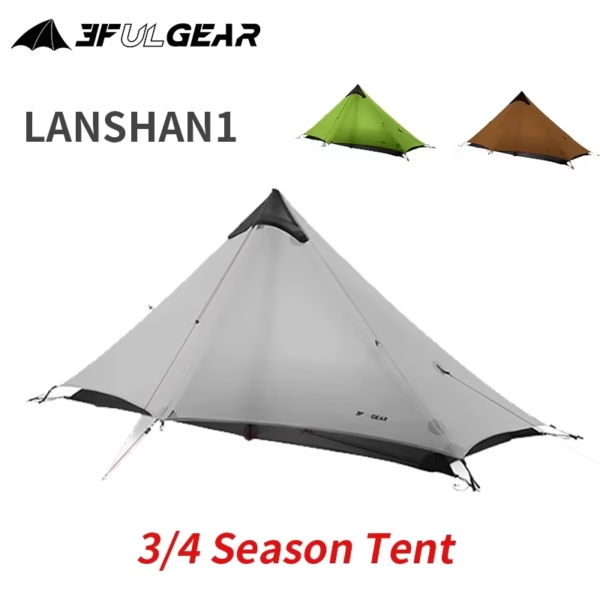
Ultralight 3 F UL GEAR Lan Shan 1 Tent for Solo Adventures Rated 5.00 out of 5
$359.23Original price was: $359.23.$250.38Current price is: $250.38. -
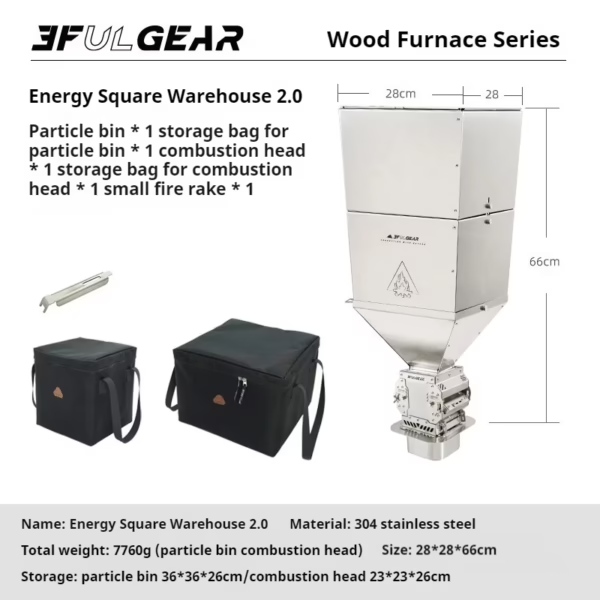
Ultimate 3 F UL GEAR 2.0 Stainless Steel Pellet Fuel Hopper Rated 5.00 out of 5
$555.43Original price was: $555.43.$387.12Current price is: $387.12.



Product Gallery
-
 Ultimate 2-3 Person Inflatable Kayak for Fishing Fun Rated 5.00 out of 5
$1,551.37Original price was: $1,551.37.$1,081.26Current price is: $1,081.26. -
VEVOR 550 lb Heavy-Duty Folding Wagon & Bench for Adventurers
$156.01 – $253.61Price range: $156.01 through $253.61
-
Adventure-Ready Ultra Bright LED Headlamp with 3 Modes
$4.67 – $25.14Price range: $4.67 through $25.14









 Camping Gear
 Camping Chair
 Camping Table
 Sleeping Bags
 Camping Bed
 Sleeping Gear
 Storage Bags
 BBQ Portable
 Camping Tents
 Gazebos
 Outdoor Cooler
 Cookware
 Power
Power Camping Light
 Flashlight
 Portable Solar
 Power Banks
 Fish Finders
 Fishing Bags
 Fishing Jerseys
 Fishing Reels
 Fishing Chairs
 Fishing Bait Boat
 Fishing Floats
 Hard Baits
 Hiking Vests
 Outdoor Bags
 Water Filters
 Paracord
 Walkie Talkie
 Paddleboards
 Boats
Boats Sea Scooter
 Accessories
 Electric Bike
 Electric Scooter
Recent Comments