



Planning a family camping trip? Awesome! But before you pack those marshmallows and head for the hills, let’s talk tents. Choosing the right family camping tent can be the difference between a blissful outdoor adventure and a soggy, cramped nightmare. Honestly, it’s one of the most important investments you’ll make for your outdoor adventures. This isn’t just about shelter, it’s about creating a comfortable and safe home base for your whole crew. So, where do you even begin? Don’t worry, I’ve got you covered.
Size Matters: How Much Space Do You Really Need?
First, let’s tackle the elephant in the… tent. How big should your family camping tent be? The golden rule is to always go bigger than you think you need. Manufacturers tend to rate tents based on how many people *can* technically squeeze inside, but that doesn’t account for gear, comfort, or personal space.
Think about this: a “4-person tent” might comfortably fit four sleeping bags, but where are you going to put backpacks, clothes, and that essential s’mores stash? Aim for at least two extra “person-ratings” than the number of people in your family. So, a family of four should be eyeing a 6-person or even an 8-person tent.
And speaking of comfort, consider the layout. Do you want separate sleeping areas? A large central living space for playing games on a rainy day? Some tents even have dividers that can create “rooms” for added privacy. These features can make a big difference in how enjoyable your camping experience is.
You know what? While we’re talking size, think about height, too. Can you stand up comfortably inside the tent? Being able to stand up straight to change clothes or just stretch your back after a long hike is a huge bonus – trust me, your back will thank you for it!
What’s Your Camping Style? Finding the Right Tent Type
Now, let’s talk tent styles. There are a ton of different types out there, each with its own pros and cons. Choosing the right type depends on your family’s camping style, the environment you’ll be camping in, and how important factors like ease of setup and portability are to you.
- Dome Tents: These are classic, reliable, and generally easy to set up. They’re great for campgrounds and general camping, offering good stability in moderate weather. Usually they’re pretty affordable, too, which is a plus when you’re kitting out a whole family for camping.
- Cabin Tents: Cabin tents are like little houses! They have near-vertical walls, offering ample headroom and a spacious feel. These are fantastic for families who value comfort and want to be able to move around easily inside the tent. However, they can be a bit bulkier and heavier than dome tents, and may not be the best choice for very windy conditions.
- Tunnel Tents: With a series of hoops creating a tunnel shape, these tents offer a lot of living space for their weight. They are often used in Europe but are gaining popularity here.
- Geodesic and Semi-Geodesic Tents: These are the heavy-duty options. The pole structure creates a very strong and stable shelter, ideal for exposed or extreme environments. Think mountaineering or winter camping. These are typically overkill for casual family camping, but if you anticipate strong winds or heavy snow, they might be worth considering. Frankly, they’re also generally more expensive.
- Pop-Up Tents: These tents promise incredibly fast setup – often just a matter of seconds. They’re great for festivals or very casual outings where convenience is paramount. The downside? They can be flimsy and difficult to fold back down (trust me, you’ll want to practice that before you’re in the middle of the woods!). Also, they usually don’t offer the best weather protection.
You know what else to think about? The ease of setup. I will show you what to look for in the next step!
Poles & Sleeves: Are Tent Construction Materials Important?
Okay, let me explain what to consider for construction materials. You don’t need to be a structural engineer to choose a good tent, but understanding the materials used in its construction can make a big difference in its durability, weather resistance, and overall performance.
- Poles: The tent’s skeleton. Aluminum poles are stronger and lighter than fiberglass poles, and they’re more resistant to bending or breaking. Fiberglass poles are more common in budget-friendly tents, but can splinter or snap under stress. If you plan to camp frequently or in challenging conditions, aluminum poles are worth the investment.
- Tent Fabric: The tent’s skin. Look for fabrics with a high denier (D) rating – this indicates the fabric’s thickness and durability. Polyester and nylon are common choices. Polyester is more resistant to UV damage, while nylon is generally stronger. Also, check the waterproof rating (measured in millimeters). A rating of 2000mm or higher is generally considered waterproof for camping tents.
- Floor Fabric: The ground beneath you. The floor material should be particularly durable and waterproof, as it’s the part of the tent that takes the most abuse. Look for a bathtub floor design, where the floor material extends up the sides of the tent a few inches. This creates a waterproof barrier that prevents water from seeping in at ground level.
- Zippers: Seriously, what a headache when they break. Invest in quality zippers, like those from YKK. These are much less likely to snag or break, and they’ll save you a lot of frustration in the long run.
Pay special attention to the seams – they should be sealed to prevent water from leaking through. Taped seams are a good sign of quality construction. Honestly, it’s all about peace of mind. And with that, comes the weather!
Weather or Not: Considering Waterproofing and Ventilation
Let’s face it; the weather is unpredictable. And when you’re camping with your family, being prepared for anything Mother Nature throws your way is crucial. Waterproofing and ventilation are two key factors that can make or break your camping experience.
Waterproofing: As mentioned above, check the waterproof rating of the tent fabric, floor, and rainfly (the outer layer that covers the tent). Look for a rating of at least 2000mm for the tent body and 3000mm for the floor. Also, make sure the seams are sealed. Even with a waterproof fabric, water can still seep in through the tiny holes created by the stitching.
Ventilation: A tent that doesn’t breathe is a recipe for condensation, which can leave you feeling damp and uncomfortable – even if it’s not raining. Look for vents in the roof and walls of the tent, ideally ones that can be opened and closed as needed. Mesh panels in the doors and windows also promote airflow while keeping bugs out.
Think about the climate you’ll be camping in most often. If you’re camping in a hot, humid environment, ventilation is especially important. If you’re camping in a rainy area, prioritize waterproofing. Many tents offer a good balance of both; it’s just a matter of finding the right one for your needs.
Also, be sure to consider accessories like footprints and guylines!
Creature Comforts: Features That Enhance the Camping Experience
Beyond the basics of size, type, and weather resistance, there are a few extra features that can really elevate your family camping experience.
- Storage Pockets: These are invaluable for keeping small items organized and off the floor. Look for pockets of varying sizes to accommodate everything from flashlights and phones to books and games.
- Gear Lofts: A gear loft is a mesh shelf that hangs from the ceiling of the tent. It’s a great place to store lightweight items like clothing or towels, keeping them out of the way and easily accessible.
- Electrical Cord Access Ports: If you plan to use electricity at your campsite (for charging phones or running a fan, for example), an electrical cord access port is a must. It allows you to run an extension cord into the tent without having to leave a door or window open.
- Doormats & Mudrooms: A small doormat placed just inside the tent door can help reduce the amount of dirt and debris that gets tracked inside. Some tents even have a small vestibule or “mudroom” area outside the door, providing a place to remove shoes and store muddy gear.
These might seem like small details, but they can make a big difference in the comfort and convenience of your camping trip. If I was to suggest one thing, it would be storage pockets, the mess in a tent without these can be astronomical!
Easy Peasy: What Makes a Tent Easy to Set Up?
Nobody wants to spend hours wrestling with tent poles after a long drive. An easy-to-set-up tent is a gift to yourself, especially when camping with kids. Here’s what to look for:
- Color-Coded Poles and Sleeves: This simple feature can save you a lot of time and frustration. Matching the colored pole ends to the corresponding sleeves or clips makes it much easier to figure out which pole goes where.
- Clip Systems vs. Sleeves: Clip systems, where the tent body attaches to the poles with clips, are generally faster and easier to use than sleeves, which require you to thread the poles through fabric channels. Sleeves can offer more stability in high winds, but clips are more convenient for most family camping situations.
- Minimal Pole Design: The fewer poles a tent has, the easier it is to set up. Look for tents with a simple, intuitive pole structure.
- Practice Makes Perfect: Before your camping trip, set up the tent in your backyard. This will give you a chance to familiarize yourself with the process and identify any potential problems before you’re in the middle of the woods.
Honestly, a quick setup can be a lifesaver, especially if you arrive at your campsite late in the day or the weather is threatening. The difference between something that takes 10 minutes to put up versus 45 is worth a small price to pay!
Weight & Portability: How Far Will You Be Carrying Your Tent?
Are you car camping, where you can drive right up to your campsite? Or are you backpacking into the wilderness? The weight and portability of your tent are much more important if you’ll be carrying it any distance.
Car Camping: If you’re car camping, weight is less of a concern. You can afford to choose a larger, more comfortable tent without worrying too much about how much it weighs. Look for tents with sturdy construction and plenty of features. The biggest constraint here is whether it packs up small enough to fit in your vehicle!
Backpacking: If you’re backpacking with your family, every ounce counts. Look for lightweight tents made from materials like ripstop nylon or silnylon. These tents are designed to be as compact and lightweight as possible, without sacrificing too much in terms of durability or weather protection. Consider splitting the tent components between family members to distribute the weight evenly. You know, let everyone carry their fair share!
Even if you’re primarily car camping, it’s still worth considering the packed size of the tent. A more compact tent will be easier to store and transport, leaving more room in your car for other gear.
And speaking of gear? Ever thought of organizing your tent? Something to ponder!
Budget Talk: Balancing Cost and Quality
Okay, let’s talk money. Family camping tents can range in price from under $100 to well over $1000. How do you find the right balance between cost and quality?
- Set a Budget: Before you start shopping, decide how much you’re willing to spend. This will help you narrow down your options and avoid overspending.
- Read Reviews: Check what other campers are saying about a tent before you buy it. Look for reviews that mention durability, weather resistance, and ease of setup.
- Don’t Skimp on Quality: While it’s tempting to go for the cheapest option, a poorly made tent can ruin your camping trip. Invest in a tent that’s well-constructed and made from durable materials – it will last longer and provide better protection from the elements.
- Consider Used Options: You can often find high-quality tents at a discounted price on online marketplaces or at consignment shops. Just be sure to inspect the tent carefully for any damage before you buy it.
Remember, a good tent is an investment. A well-maintained tent can last for many years, providing you with countless family camping memories. It’s better to spend a little more upfront for a quality tent than to have to replace a cheap one every few years, trust me.
A Final Note on Maintenance: Keeping Your Tent in Tip-Top Shape
So you’ve found the perfect family camping tent. Congratulations! But the work doesn’t stop there. Proper care and maintenance are essential for extending the life of your tent and ensuring it performs well for years to come.
- Clean Your Tent After Each Trip: Wipe down the tent floor with a damp cloth to remove dirt and debris. If the tent is particularly dirty, you can wash it with a mild soap and water solution. Just be sure to rinse it thoroughly and let it dry completely before storing it.
- Dry Your Tent Thoroughly: Never store a wet tent. Moisture can lead to mold and mildew, which can damage the fabric and make the tent smell musty. Hang the tent up to dry completely before packing it away.
- Store Your Tent Properly: Store your tent in a cool, dry place, away from direct sunlight. Avoid storing it in its stuff sack for extended periods – this can compress the fabric and damage the waterproof coating. Instead, store it loosely in a larger bag or container.
- Repair Damage Promptly: If you notice any tears or holes in the tent fabric, repair them as soon as possible. You can use a tent repair kit or take the tent to a professional for repairs.
With a little care and attention, your family camping tent will be your trusted companion for many adventures to come. Happy camping!
FAQ Section
DISCLAIMER
Always check weather conditions before embarking on a camping trip. Be prepared for changing weather and bring appropriate gear. Familiarize yourself with campsite rules and regulations. Leave no trace behind.
Categories
- Navigation & Safety (68)
- Shelter & Sleep (72)
Top rated products
-
 Effortless Power: 20 W Solar Charger for Blink Outdoor Cameras Rated 5.00 out of 5
$45.66Original price was: $45.66.$31.82Current price is: $31.82. -
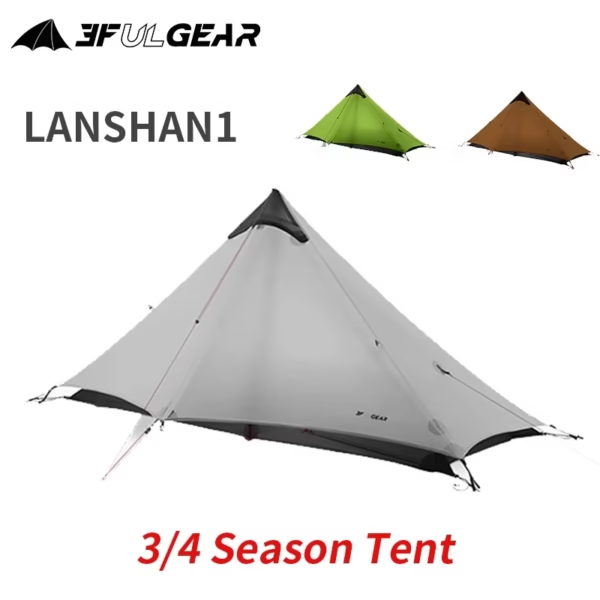
Ultralight 3 F UL GEAR Lan Shan 1 Tent for Solo Adventures Rated 5.00 out of 5
$359.23Original price was: $359.23.$250.38Current price is: $250.38. -
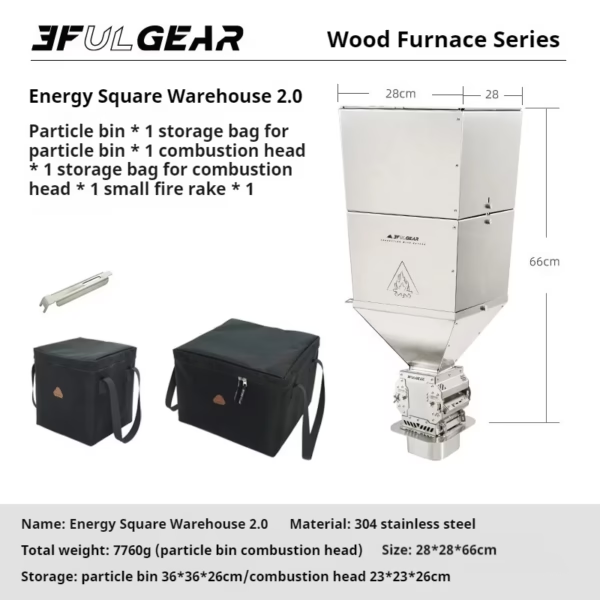
Ultimate 3 F UL GEAR 2.0 Stainless Steel Pellet Fuel Hopper Rated 5.00 out of 5
$555.43Original price was: $555.43.$387.12Current price is: $387.12.



Product Gallery
-
 Ultimate 2-3 Person Inflatable Kayak for Fishing Fun Rated 5.00 out of 5
$1,551.37Original price was: $1,551.37.$1,081.26Current price is: $1,081.26. -
VEVOR 550 lb Heavy-Duty Folding Wagon & Bench for Adventurers
$156.01 – $253.61Price range: $156.01 through $253.61
-
Adventure-Ready Ultra Bright LED Headlamp with 3 Modes
$4.67 – $25.14Price range: $4.67 through $25.14













 Camping Gear
 Camping Chair
 Camping Table
 Sleeping Bags
 Camping Bed
 Sleeping Gear
 Storage Bags
 BBQ Portable
 Camping Tents
 Gazebos
 Outdoor Cooler
 Cookware
 Power
Power Camping Light
 Flashlight
 Portable Solar
 Power Banks
 Fish Finders
 Fishing Bags
 Fishing Jerseys
 Fishing Reels
 Fishing Chairs
 Fishing Bait Boat
 Fishing Floats
 Hard Baits
 Hiking Vests
 Outdoor Bags
 Water Filters
 Paracord
 Walkie Talkie
 Paddleboards
 Boats
Boats Sea Scooter
 Accessories
 Electric Bike
 Electric Scooter
Recent Comments